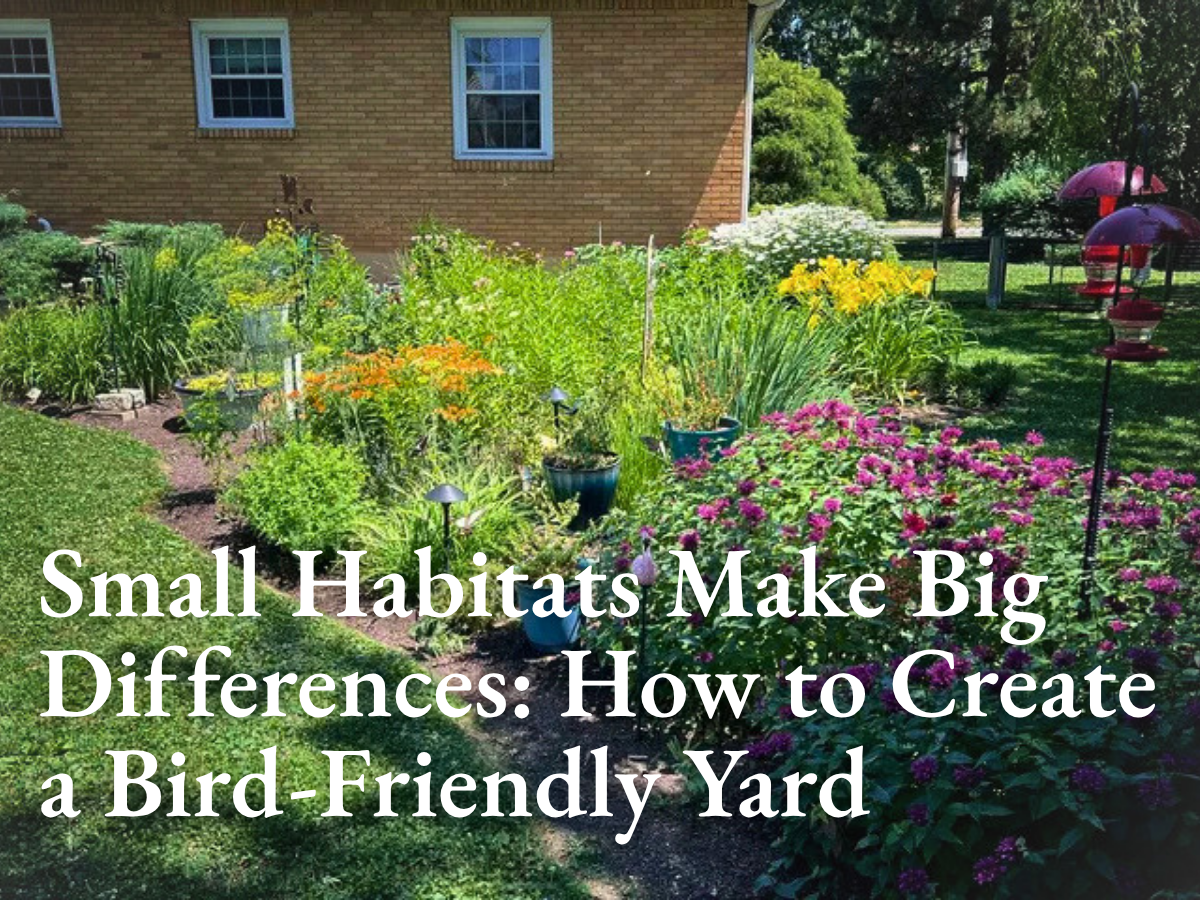
Living in the Town of Tonawanda, I have a small but nice backyard with a good sized apple tree. When my wife and I moved into our house in the spring of 2012, we were told we would have to spray the tree with pesticide or the apples would be full of worms and nobody would want to eat them. I really am not interested in paying someone to spray my yard with pesticides.
Every spring, that apple tree is covered in pink apple blossoms, and those blossoms are full of pollinating insects. Not surprisingly, birds that eat insects were also attracted to my backyard, including a lone Nashville Warbler.
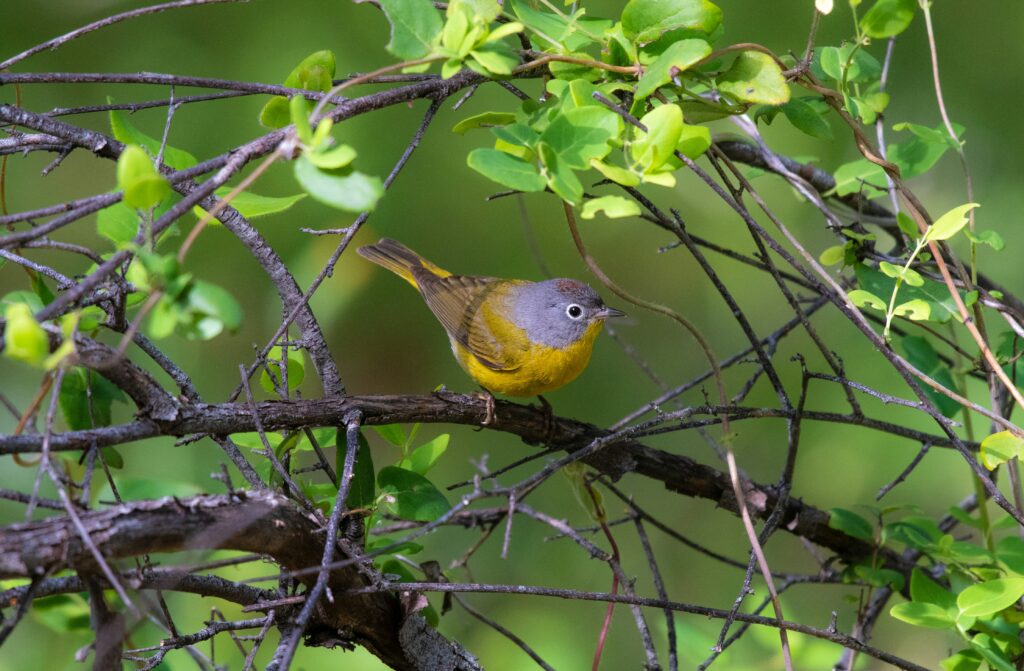
Like most other warblers, Nashville Warblers spend their winters in Mexico and Central America and migrate into the northern United States and Canada. Their migration journey is long, and they pass over some of the most densely populated areas of the world.
My backyard was one of the places this tiny bird decided to stop on his way to his summer nesting territory, and that apple tree with the pink blossoms (and all the insects that it attracted) was the reason why. I checked the tree every morning before driving to work and found him happily feeding on insects.
He stayed about a week, then the flowers fell to the ground and he moved on. With the apple blossoms replaced by apples in the fall, I didn’t expect to see him or any other warblers on the return journey. Like I was told, most of the apples were full of worms, holes, and other unappetizing things, but we were able to find a bushel’s worth of decent apples and my wife made apple sauce.
When spring rolled around the next year, I was outside every morning checking my tree to see if that Nashville Warbler had returned. I didn’t see it at first, but a few days after the apple blossoms appeared, I heard the buzzy song of a Nashville Warbler from inside my house.
download the free guide!
Interested in making your home safer for birds? Download our best practices to help make your home or business a place where birds can thrive.
I grabbed my binoculars and ran outside to see him. He stayed for a few days and moved on just like last year. I really can’t say it was the same Nashville Warbler I saw the year before, but I don’t see a lot of warblers in my yard, and it makes for a good story that I tell kids when I am teaching lessons on migration and bird-friendly backyards.
During those lessons, I show them a population density map of the United States. The darker color, the more densely populated an area is. I ask them if they think the map will ever get lighter in color in the near future, and most quickly realize that the answer is no. Every time these migrating birds pass over the United States, there will be more people.
What would happen to that Nashville Warbler if I cut down my tree, or sprayed it with pesticide? Even kids realize that would be bad news for birds in my yard. The good news is that small habitats can add up and make big differences. If birds flew over a neighborhood and saw trees, shrubs, flowers, and water instead of just concrete and perfectly manicured lawns, their journeys would be much easier.
How to Create a Bird-Friendly Yard:
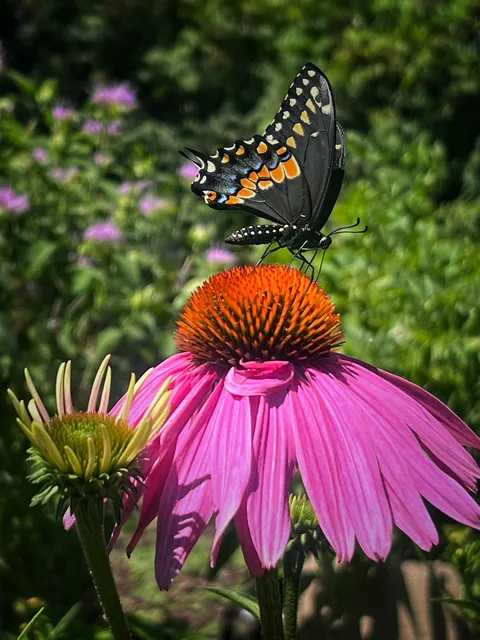
- Create a plan. Don’t run home after reading this and tear out your lawn. If you tear out something, be ready to replace it. You don’t have to do it all at once.
- Plant native plants. Not only will many native plants provide a food source for birds, they also provide food and shelter for insects that many birds will eat. National Audubon’s lookup tool enables you to easily find plants that are native to your region.
- Control invasive species. Along with planting native, it helps to mitigate the growth of invasives in your area, which can monopolize food, space, and sunlight.
- Limit pesticide use. Birds eat insects, and if you remove them with pesticide, you are removing the primary food source for many migratory species.
- Provide clean water and food for birds. A simple bird bath that is kept clean can provide enough water for the wildlife in your backyard. Plus, stocking and maintaining your feeders consistently provides an added food source for birds.
- Provide shelter for birds. Birdhouses are great, but most birds won’t go near them. Give birds a place to hide in shrubs and other native vegetation.
- Keep your cat indoors. Make your backyard a safe place for birds. Cover your windows with netting or bird tape to reduce collisions with glass.
- Talk to your neighbors about your bird-friendly backyard. If you can get them on board, you will increase the size of the habitat you are trying to build, and help foster a bird-friendly community.
- Participate in citizen science projects like eBird, Hummingbirds@Home, The Great Backyard Bird Count, and the Christmas Bird Count. Studies like these help ornithologists monitor how birds are adapting to a world dominated by human activity. You can also register your bird-friendly backyard at yardmap.org to document its value to birds.
Small habitats are becoming more important every year for migrating and resident birds, and they add up to make big differences.
Interested in making your home or business
more bird-friendly?
Schedule a program with one of our experts!
Together, we’ll explore tangible ways to make your home, business, or community safer for birds.
If you’d like to learn more about how to make your community safer for birds, visit the Buffalo Audubon and Bird-Friendly Buffalo websites and join our community! Stay updated on upcoming Bird-Friendly Buffalo programs and events, related reading, and so much more!
You can also take the Bird-Friendly Buffalo pledge to support Buffalo becoming a bird-friendly city, or schedule a program with a Buffalo Audubon expert to learn more about tangible solutions for making your business or community safer for birds.
Buffalo Audubon leads and inspires Western New Yorkers to connect with and protect the natural world through bird-focused activities, advocacy, and habitat restoration. Our organization launched the Bird-Friendly Buffalo movement in 2025, to help raise awareness and guide communities with practical solutions to build a bird-friendly city.
Leave a Reply