Each year, 4 billion birds migrate south from Canada into the United States for fall migration, while about 4.7 billion birds fly from the United States to the tropics in that time.
Unfortunately, as many as a billion birds are killed by window strikes in the United States alone—and this does not include the millions who are stunned or injured after collisions.
Window collisions are a prevalent issue for birds across the United States and beyond—but they are also a preventable one.
By taking a few simple actions, you can help significantly reduce window collisions in your community, and prioritize a region where birds and people can thrive.
Why do birds fly into windows?
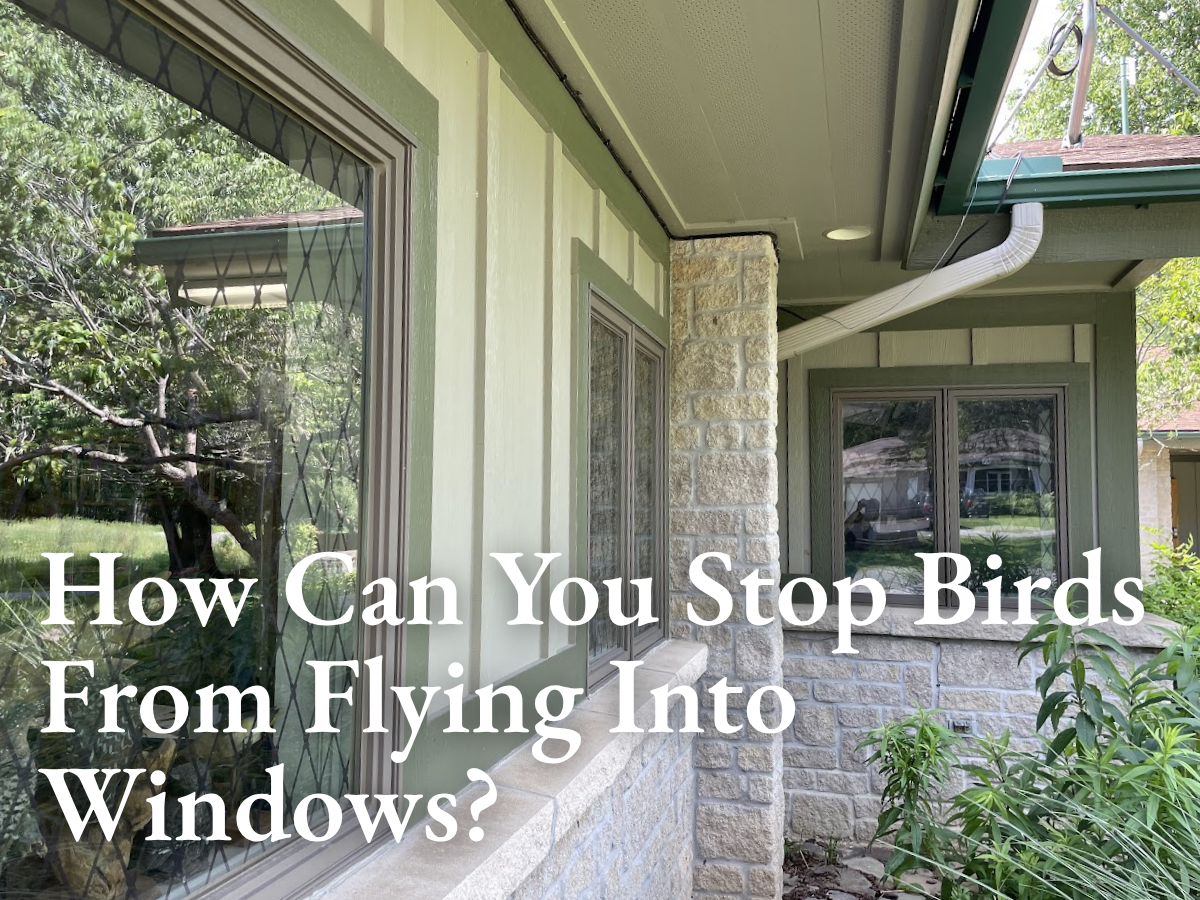
Many times during migration periods, birds fly into windows because they mistake large, unobstructed panes of glass as open skies, and aim to fly “through” them. Here is a simulation of how birds might perceive a glass window.
While many birds die from such window collisions, many others are left injured and stunned—making them more vulnerable to predators.
Additionally, artificial lights—particularly those left on at night—can also confuse or disorient birds, who depend on a clear night sky to chart their migration pathways.
How can I stop birds from flying into my windows?
Although the toll of window collisions is mounting, the good news is that they are preventable.
Here are a few simple actions we can take to minimize window collisions to our homes, businesses, and communities:
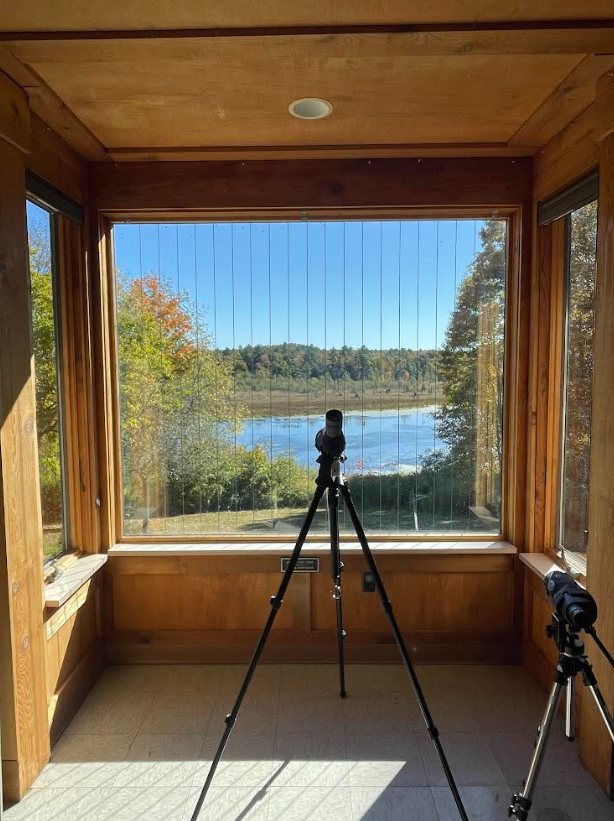
1. Add decals or screens to large glass windows.
From window clings and attractive films to custom paracord curtains that hang outside windows, there are seemingly limitless options of decals and screens you can add to windows.
While a simple, often cost-effective option, doing so makes all the difference—helping to interrupt large, expansive panes of glass that birds could mistake for open flyways. By breaking up the reflections birds might see in these windows, we can help birds recognize these objects and steer clear in flight.
2. Move indoor plants away from glass.
When birds see plants, they tend to interpret it as being a safe place to land.
Consider moving plants away from large, expansive windows so birds are not enticed to move toward it.
While another simple change, it helps reduce collision risk.
download the free guide!
Interested in making your home safer for birds? Download our best practices to help make your home or business a place where birds can thrive.
3. Go Lights Out, especially during migration seasons.
Particularly during peak migration (between April 15–May 31 and Aug. 15–Nov. 15), it’s a beneficial practice to turn off non-essential lights after 11 p.m.
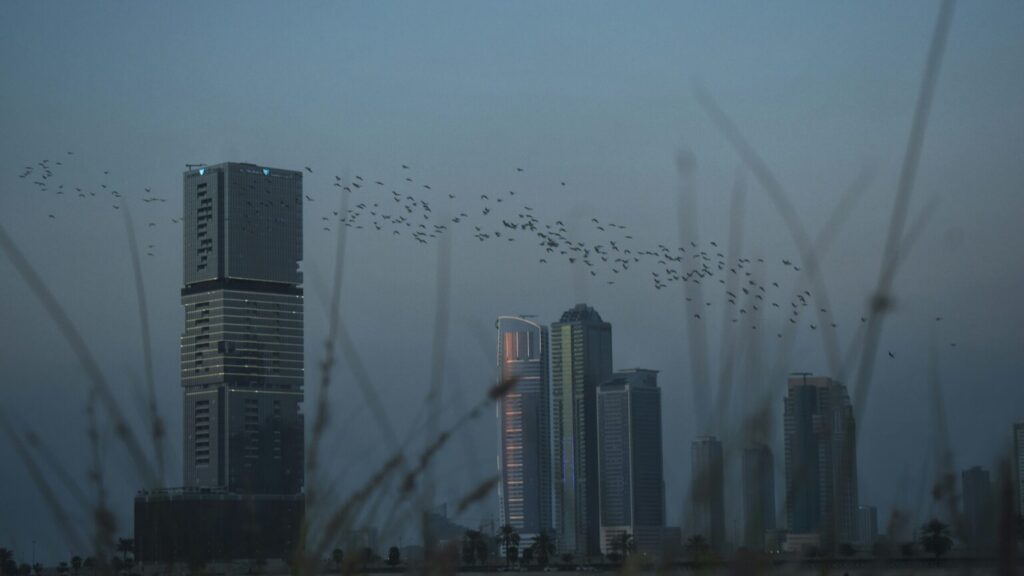
This helps to minimize light pollution and help birds safely navigate their passages with a clear night sky.
If you’d like to participate in going Lights Out in your community you can also consider the following:
- Use motion sensors or dimmers
- Pull down shades & window coverings
- Minimize flood lights
- Swap bright bulbs for warmer ones, which are less likely to trigger responses in birds
From small communities to larger ones, the Lights Out movement is one that’s gaining traction—and for good reason.
Take the 9/11 memorial in New York City, for example—the lights of which attracted hundreds of birds in its beams each year. However, when the lights were turned off—even for 20 or 30 minutes at a time—the population density of birds in that area cleared substantially.
Similarly, prioritizing Lights Out practices near you—especially during migration—helps to significantly reduce bird population density within minutes, supporting safer flight.
4. Advocate for bird-safe design in your community.
Knowledge is power—and simple actions make all the difference.
Consider attending local forums and programs, or participating in local efforts to champion bird safety in your community.

Anything helps. Buffalo Audubon routinely offers educational programming highlighting practices for simple ways you can make your home or business safer for birds (such as our make-and-take paracord programming), or you can schedule a Bird-Friendly Buffalo program for your group to learn more about such practices.
Each year, you can attend the Bird-Friendly Buffalo Symposium, sponsored by Buffalo Audubon, to hear from local speakers about best practices for cultivating a community that prioritizes birds—from Lights Out practices, to what to do if you find an injured bird.
You can also make your voice heard to political leaders near you—whether by writing a letter, or signing an existing pledge to advocate your region’s commitment to bird-friendly practices.
The options are extensive—but whether through small actions taken at home, or others in your community, each one matters in supporting a region where birds, and people, can thrive.
Interested in making your home or business
more bird-friendly?
Schedule a program with one of our experts!
Together, we’ll explore tangible ways to make your home, business, or community safer for birds.
If you’d like to learn more about how to make your community safer for birds, visit the Buffalo Audubon and Bird-Friendly Buffalo websites and join our community! Stay updated on upcoming Bird-Friendly Buffalo programs and events, related reading, and so much more!
You can also take the Bird-Friendly Buffalo pledge to support Buffalo becoming a bird-friendly city, or schedule a program with a Buffalo Audubon expert to learn more about tangible solutions for making your business or community safer for birds.
Buffalo Audubon leads and inspires Western New Yorkers to connect with and protect the natural world through bird-focused activities, advocacy, and habitat restoration. Our organization launched the Bird-Friendly Buffalo movement in 2025, to help raise awareness and guide communities with practical solutions to build a bird-friendly city.
Leave a Reply