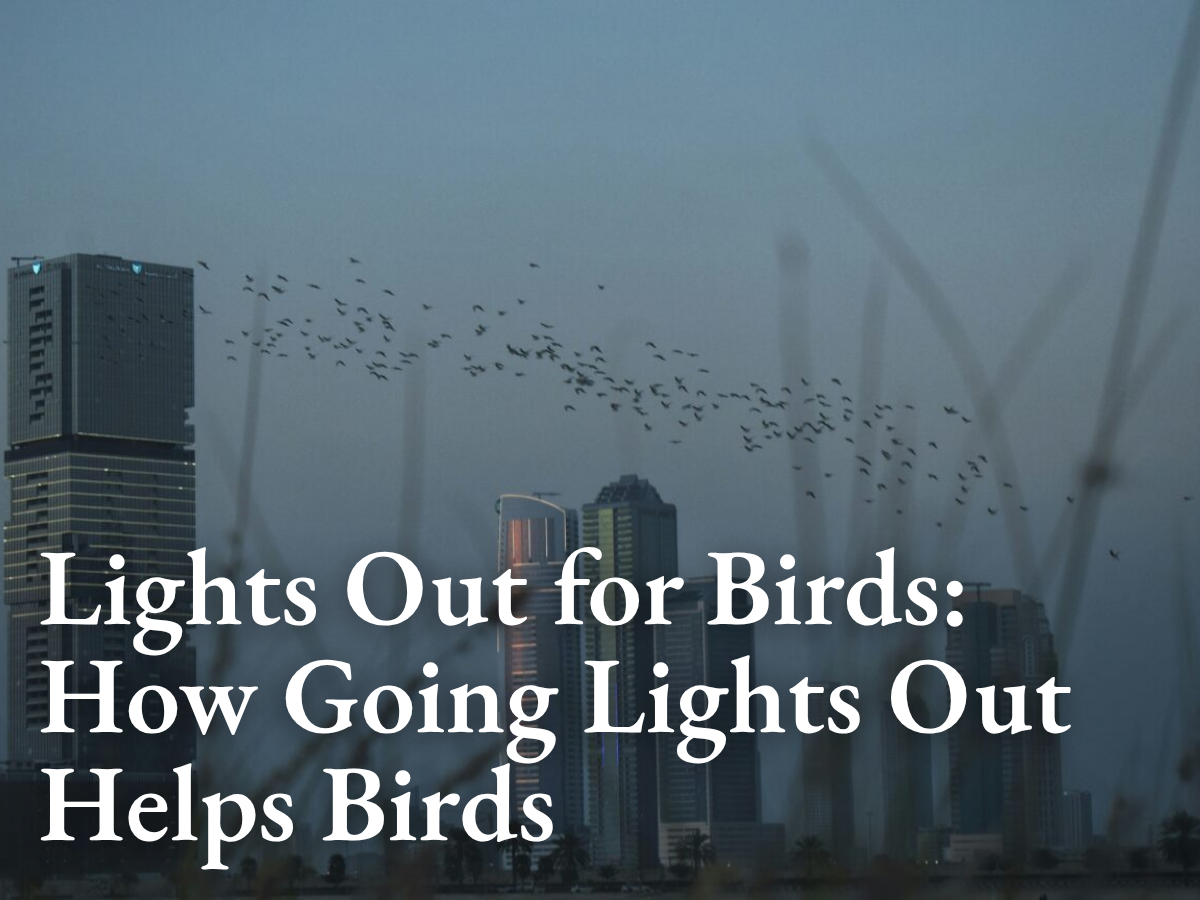
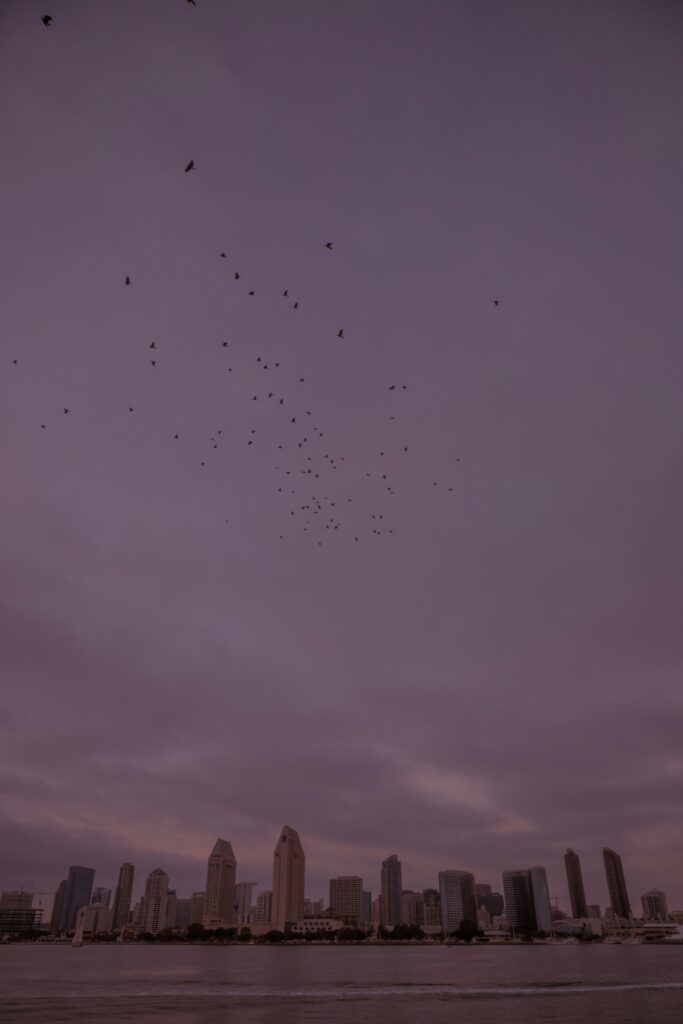
During peak migration seasons (between April 15 through May 31 and Aug. 15 through Nov. 15), as many as 400 million birds can fly over the United States in one night alone.
In fact, 70% of all North American birds migrate—and 80% of the time, they do so at night.
But why at night? For birds, it’s an ingrained biological instinct.
Birds often rely on the stars and a clear, unobstructed night sky to make their journeys, and light pollution can significantly disorient birds on their migration pathways.
To help support birds—during migration season and all year—the solution is a simple one: go Lights Out after 11 p.m.
By eliminating non-essential lights after 11 p.m., pulling down shades, and swapping brighter bulbs for dimmer ones, among other best practices, we can help birds fly safely—during migration season and beyond.
Why Going Lights Out Matters
According to the New World Atlas of Artificial Night Sky Brightness, 99% of people in the United States and Europe live beneath artificial light-polluted skies, to a certain degree, and 80% are unable to see the Milky Way.
Birds—like all living things—have evolved beneath dark skies, and do have the innate ability to detect low levels of natural light at night, but too much light pollution can disrupt their natural abilities and cause confusion.
In fact, as birds migrate to their destinations, they are particularly drawn to bright lights inside and around skyscrapers, residential homes, and office buildings, and fly toward them—and many times, fly into them.
Unfortunately, as many as a billion birds are killed by such building collisions and windows each year—but perhaps, even more than this.
While collisions cause a high number of bird casualties, it is often the case that birds waste precious energy flying around and calling out in confusion—making them more vulnerable to other predators and threats.
That’s where Lights Out comes in.
As birds are heavily dependent on clear, dark skies—not only during migration, but in their wayfinding all year—limiting how much artificial light we put into the ecosystem helps tremendously.
Turning lights off at night, even for a small period of time, helps significantly reduce the density of birds in a given area, sometimes within minutes.
This was what happened in the case of the 9/11 memorial in New York City. Every year, hundreds of birds were caught up in the memorial’s beams, but when lights were turned off for even 20 or 30 minutes at a time, the population density cleared substantially.
How You Can Go Lights Out for Birds
Many Lights Out programs are being created in cities and states across the country to protect birds and minimize light pollution.
However, getting involved and going Lights Out in your community is as simple as taking any number of the following actions:
Ways You Can Contribute to Lights Out
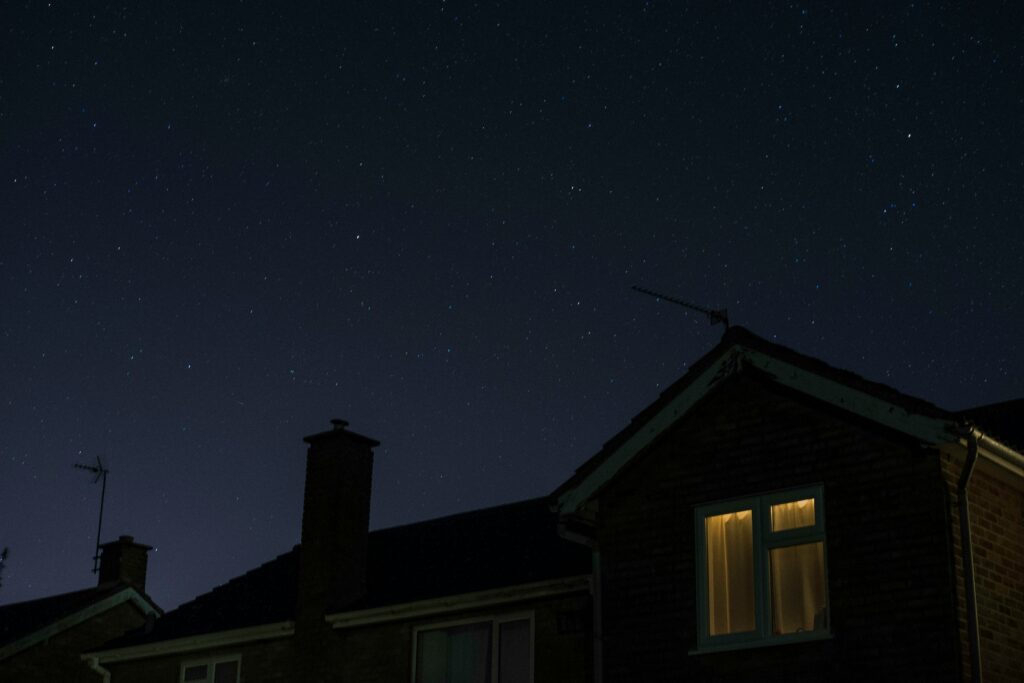
- Turn off unnecessary lights after 11 p.m., especially from April 15–May 31 and August 15–November 15.
- Use motion sensors or dimmers.
- Pull down shades & window coverings.
- Minimize flood lights.
- Swap bright bulbs for warmer ones, which are less likely to trigger behavioral responses in birds.
While simple, any number of these actions makes a significant difference for birds and light pollution near you.
Creating Communities Where Birds—and People—Can Thrive
As is often the case, the smallest actions have the potential to have the greatest impact.
When homeowners, business owners, and community members across your region each prioritize these small actions to protect birds, it cumulates to build a clearer night sky, and a safer environment for birds—and by extension, people and the natural world.
If you’d like to learn more about how to make your community safer for birds, visit the Buffalo Audubon and Bird-Friendly Buffalo websites and join a community invested in protecting birds. Stay updated on upcoming Bird-Friendly Buffalo programs and events, related reading, and so much more!
Plus, take the pledge to support Buffalo becoming a bird-friendly city, or schedule a program with a Buffalo Audubon expert to learn more about tangible solutions for making your business or community safer for birds.
Buffalo Audubon leads and inspires Western New Yorkers to connect with and protect the natural world through bird-focused activities, advocacy, and habitat restoration. Our organization launched the Bird-Friendly Buffalo movement in 2025, to help raise awareness and guide communities with practical solutions to build a city where birds can thrive.
Leave a Reply