
In the City of Good Neighbors, it’s not uncommon to see someone pulling over the side of the road in a snowstorm to see if a driver with their hazards on is okay.
It’s not uncommon to water your neighbor’s plants, or check in on their home when they’re away on vacation. And it’s not uncommon to give directions or recommendations if someone looks lost.
Here, these things are about as instinctual as bleu cheese with chicken wings and loganberry with Ted’s Hot Dogs. All’s to say, we’ve developed a bit of a reputation for our kindness toward our neighbors.
And at Buffalo Audubon, we’re looking to extend that to our backyard neighbors, too.
Enter: the Bird-Friendly Buffalo movement.
Founded in 2025, our Bird-Friendly Buffalo initiative seeks to do just that—explore simple, tangible steps and solutions we can use to be good neighbors to the birds, right in our backyards.
From applying stickers to our windows or turning off bright lights at night, we believe changes don’t have to be big and out of reach to be lasting. Every small action makes a difference.
Let’s explore the Bird-Friendly Buffalo movement, along with five tips we’d recommend to help birds in your area—whether you’re in the City of Good Neighbors (hey, neighbor!) or beyond.
What is Bird-Friendly Buffalo?
Bird-Friendly Buffalo is a movement sponsored by Buffalo Audubon, with one central goal and mission: to make Buffalo a bird-friendly city by supporting its communities in cultivating bird-friendly programming and infrastructure that helps birds thrive.
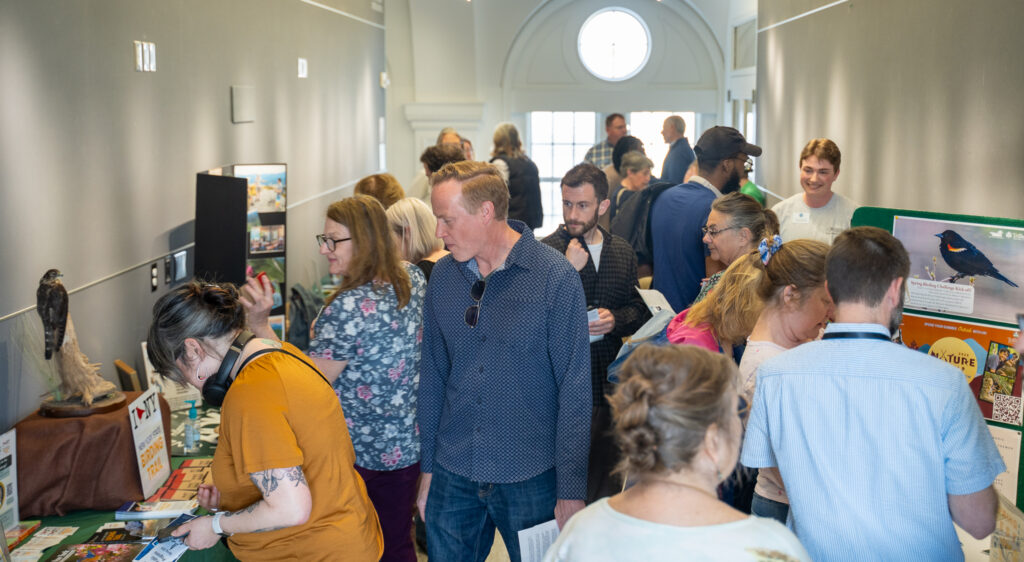
Everything we do is with that in mind—from our community education programming, to our annual symposium event.
Through our Bird-Friendly Buffalo community education programming, we visit local schools, community organizations, and other groups to learn about ways to create a bird-safe city, right in our backyard.
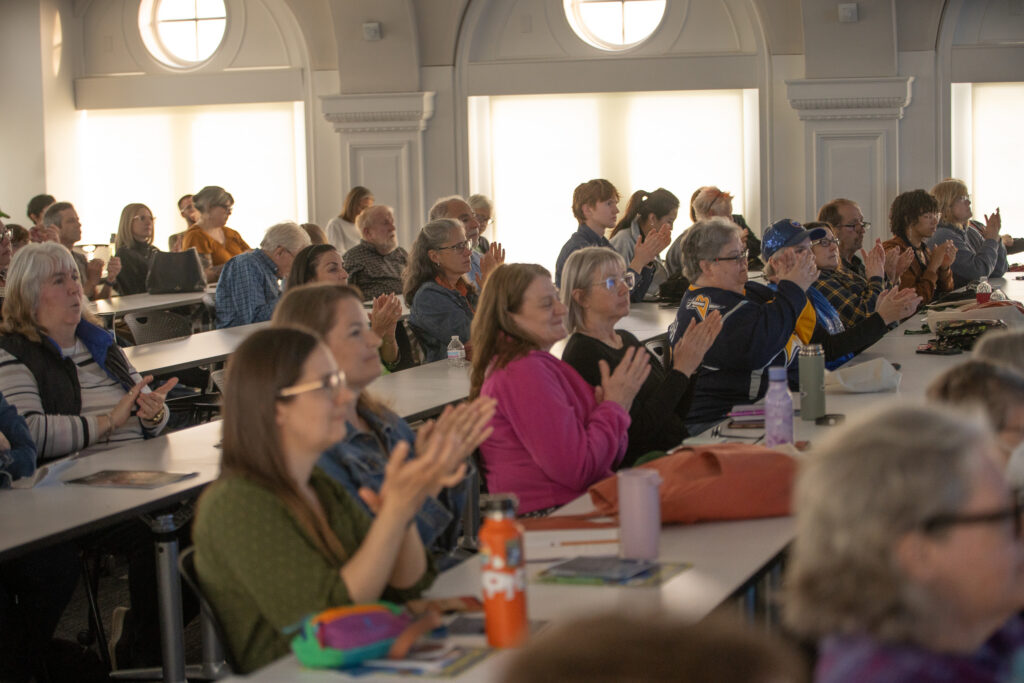
On April 23, 2026, we wrapped up our second Bird-Friendly Buffalo Symposium—a consortium of expert environmentalists discussing topics such as going Lights Out during migration, bird rehabilitation, and more. Speakers included:

- Dr. Adriaan M. Dokter, Project Leader for BirdCast at the Cornell Lab of Ornithology
- Tom Kerr, Senior Naturalist at Buffalo Audubon
- Hannah Semo, Master’s student at the University at Buffalo Department of Environment and Sustainability
- Aaron Karpinski, Director of the SPCA Wildlife Department
- Meredith Barges, Co-Founder of Lights Out! Connecticut & Chair of Lights Out Central New York
Five Ways to Build a Bird-Friendly Region
Across all these efforts, our program focuses on five key areas that we encourage as opportunities for helping birds in our area, including:
- Ensuring Bird-Friendly Buildings & Windows
- Going Lights Out for Birds
- Planting & Supporting Native Plants
- Eliminating Rodenticide Use
- Being Aware of Free-Roaming Cats
Let’s explore each.
1. Ensuring Bird-Friendly Buildings & Windows
Each year, millions of birds die in preventable window collisions and light confusion during migration.
Every autumn, as many as 4 billion birds migrate south from Canada into the U.S. every autumn, while 4.7 billion birds head to the tropics from the U.S., during this time.
Unfortunately, as many as a billion birds are killed by window strikes in the U.S. alone. This does not include the millions of birds who are stunned or injured after collisions.
However, making our homes and businesses safer for birds doesn’t have to be a lofty goal that’s out of reach.
Here’s how to make our homes, offices, and community buildings and windows more bird-friendly:
- Add decals or screens to large glass windows.
- Move indoor plants away from glass.
- Turn off non-essential lights, especially during migration seasons.
- Advocate for bird-safe design in your community.
2. Going Lights Out for Birds
Throughout spring and fall migration periods (August 15–November 15 and April 15–May 31), birds use the night sky to navigate as they make their journeys.

However, artificial lights left on at night—particularly from skyscrapers, office buildings, and brightly lit homes—confuse and disorient birds, which causes them to collide into buildings and windows.
While this does result in some bird fatalities, it is more often the case that birds waste precious energy flying around and calling other birds in confusion—making them more vulnerable to other threats.
As with many bird-friendly improvements, simple actions can make all the difference.
To contribute to Lights Out, consider the following:
- Turn off unnecessary lights after 11 p.m., especially from April 15–May 31 and August 15–November 15.
- Use motion sensors or dimmers
- Pull down shades & window coverings
- Minimize flood lights
- Swap bright bulbs for warmer ones, which are less likely to trigger behavioral responses in birds
3. Planting & Supporting Native Plants
Planting native flowers, shrubs, and trees helps restore nature’s balance by feeding pollinators, insects, and—ultimately—birds.
With 15 billion trees cut down yearly, birds are continually being pushed out of their homes. Native plants support nature’s balance by sustaining pollinators and insects, which works their way up the food chain.
Why Native Plants Make a Difference:
- Native plants need less watering, less maintenance, and way less fuss.
- Pollinators love them, and birds rely on those pollinators.
- Your garden will attract hummingbirds, butterflies, and other show-stopping visitors.
4. Eliminating Rodenticide Use
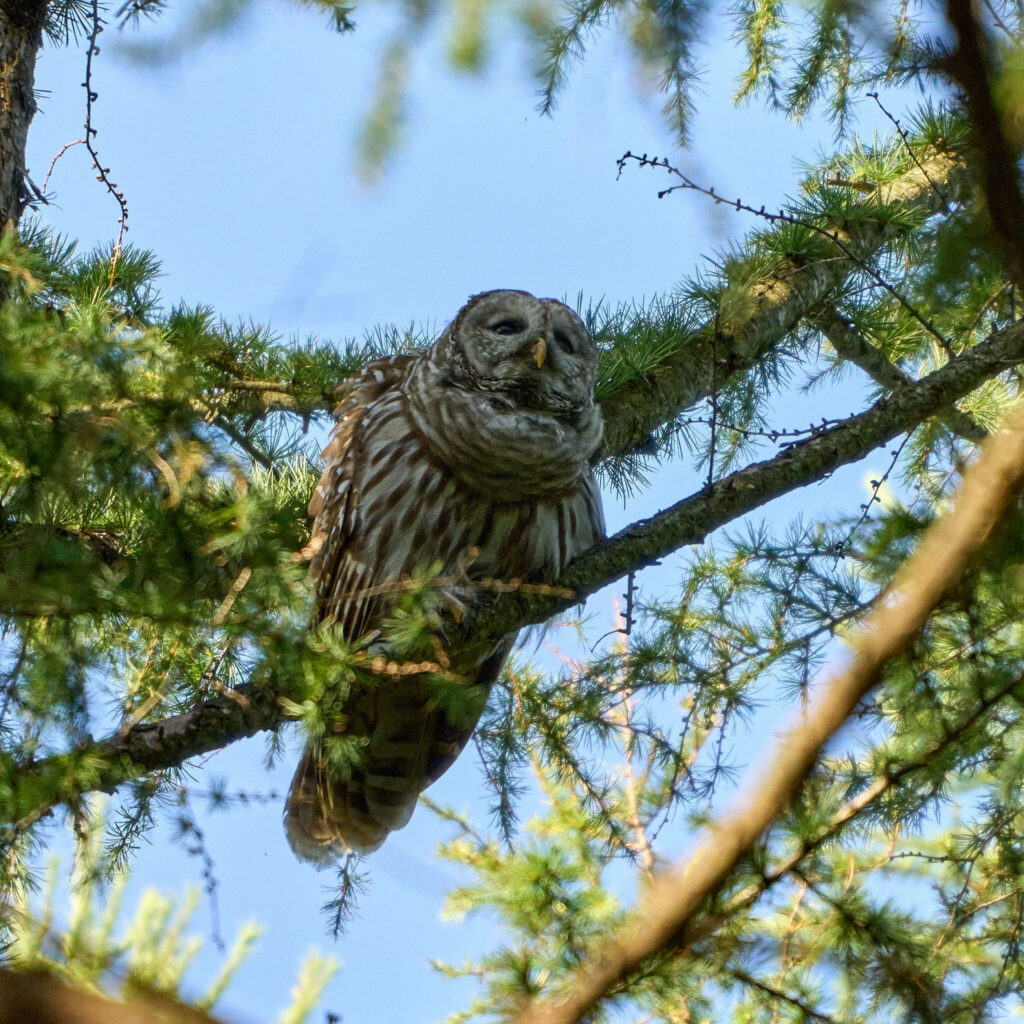
Rodenticide (rat poison) impacts more than just rats; it’s a death sentence for owls, hawks, eagles, and other birds of prey.
In fact, according to a 2020 study from Tufts Wildlife Clinic at Cummings School of Veterinary Medicine, 100% of red-tail hawks admitted to the clinic tested positive for exposure to rodenticides.
Now more than ever, it is vital to mitigate rodenticide use to protect birds of prey and foster a more bird-friendly city.
Consider these alternatives to rodenticide:
- Use snap traps instead of poison.
- Seal entry points in your home.
- Keep food stored safely to avoid attracting rodents.
Minimizing poisons in the food chain helps to not only protect predators, but keep the whole ecosystem in balance.
5. Being Aware of Free-Roaming Cats
There’s no question: cats are lovable companions and efficient hunters. But when left unsupervised, they can be harmful to birds and other populations.
In fact, all of the other causes of bird deaths, such as building glass, poisons, and do not come close to the mortality rate attributed to cats.
Feral and roaming cats are the leading human-related cause of bird deaths across the globe, with 2.4 billion birds killed yearly by outdoor cats in the United States.
To promote a safer environment for birds and cats, we’d recommend these best practices:
- Keep cats indoors. If they need to go out, ensure they are supervised or on cat patios.
- Spay or neuter cats to mitigate over-populating and stray cats.
- Ensure birdfeeders are high enough that cats can’t easily reach them.
- Support local shelters that rehome stray or wild cats.
- Learn more about birds and how to help them thrive.
Building a More Bird-Friendly Buffalo—One Person, One Light, One Action at a Time
Are you interested in learning more about how to make your region safer for birds?
Visit the Buffalo Audubon website to stay updated on upcoming Bird-Friendly Buffalo programs and events, related reading, and so much more!
Plus, take the pledge to support Buffalo becoming a bird-friendly city, or schedule a program with a Buffalo Audubon expert to learn more about tangible solutions for making your business or community safer for birds.
Buffalo Audubon leads and inspires Western New Yorkers to connect with and protect the natural world through bird-focused activities, advocacy, and habitat restoration. Our organization launched the Bird-Friendly Buffalo movement in 2025, to help raise awareness and guide communities with practical solutions to build a city where birds can thrive.
Leave a Reply