
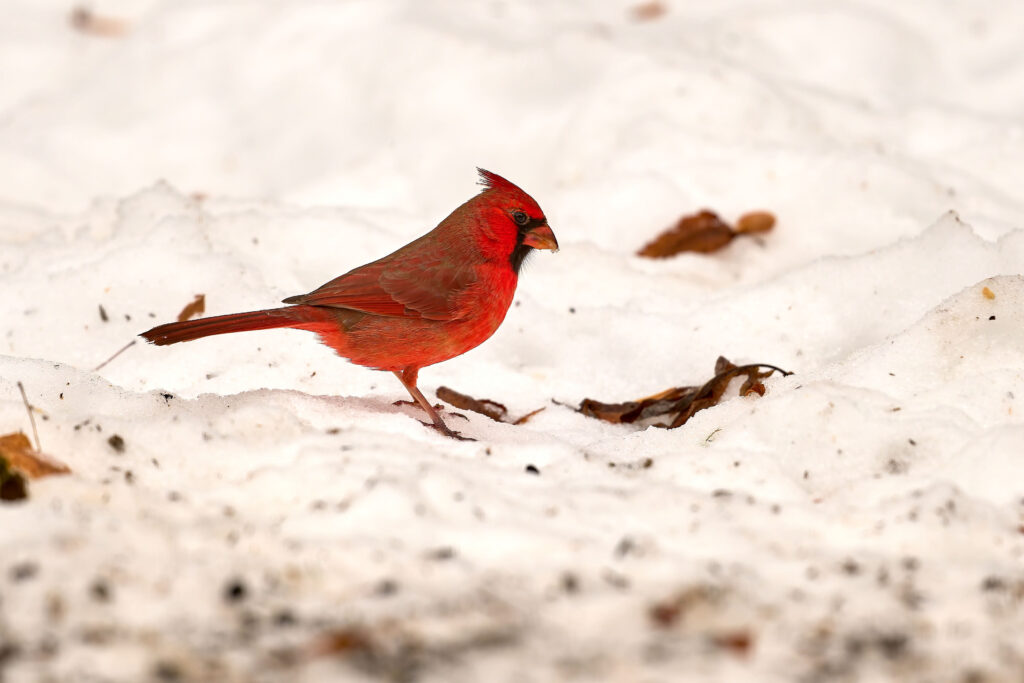
Birds rely on several unique, amazing adaptations and behaviors that help them survive the long, cold winter months—from caching food and puffing out their feathers, to endothermically regulating their body temperature.
And while they don’t necessarily require our help to survive the season, seeing as they have done so for millions of years, putting out feeders with nutrient-rich foods gives them an added reliable food source when it’s otherwise scarce.
Here are seven best practices we’d recommend for feeding birds in your backyard this winter.
Best Practices for Feeding Winter Birds
1. Opt for Foods With High Fat & Oil Content
While your mind might go to bears in dens when you think of animals storing food for the winter, birds need to store up on their fat reserves, too—and they do this, primarily, through nutrient-rich foods with high fat and oil content.

When filling your backyard feeders, consider the following:
- Black Oil Sunflower Seeds: This seed has been called the “hamburger” of the bird world in an Audubon Magazine article—a crowd pleaser for many birds because of its thin, easy-to-crack shell and high oil content.
- Suet: Woodpeckers, nuthatches, chickadees, and other insect-eating birds love this option for its high fat content—giving them energy all day long. Think of it as a protein bar for birds.
- Peanuts: Blue Jays, in particular, will not leave your feeder alone if you put out some peanuts for them. Just make sure they’re de-shelled, unsalted, and dry-roasted.
- Mealworms: The early bird, and all. Most birds will go for these due to their high protein and fat content. If you’re not too squeamish to include them in your backyard buffet, a good way to store and serve them is by storing 1,000 worms in a container of rolled oats, and putting them in a ceramic dish so they can’t crawl out its sides, continues the Audubon Magazine article.
- Thistle (Nyjer or Niger) Seed: These small, soft seeds are great for birds with small beaks (think finches, American Goldfinches, Redpolls and other songbirds). Similar to these other options, they help keep such birds satisfied with high oil and protein content.
2. Stay Away From Most Human Food
How would you feel if you ate bread all day, every day? (Well, if you’re this writer, maybe just a little happy… but pretty protein deficient.)
While it’s healthy for humans to eat all the food groups to maintain a well-rounded diet, it’s essential for birds to get the specific nutrients they need from their foods, too. As such, this shouldn’t include human foods with high carbohydrate and sugar content.
While some might feed birds bread or Cheerios, these foods can actually cause malnutrition in birds because they lack the essential nutrients they need, in contrast with nuts, seeds, and other natural foods.
This causes birds to fill up, without providing energy, and makes them more likely to develop issues with their metabolism, or even obesity and conditions like angel wing in waterfowl—an often fatal deformity that causes a last wing joint to twist outward, and prevents flight.
Instead, if you are going to put out any foods from your kitchen, opt for berries (such as blueberries, raspberries, or strawberries), bananas, pears, grapes, apples, or citrus (oranges, mangoes, or grapefruits). Just make sure to remove the seeds (especially in apples) and cut the fruit into slices or halves.
3. Clean & Monitor Regularly
If not as important as choosing the right food for your feeders is keeping them clean, covered, and free from mold. It’s best practice to clean your feeders once per week, and monitor the food inside for any indications of mold. If you do notice mold, throw out the food, clean the feeder, and replace the food with fresh food.
A good way to ensure, though, that the contents of your feeders don’t get moldy is by opting for covered feeders, when you can. There are numerous types of feeders available—from hopper or tube feeders to window, thistle (nyjer), suet, and window feeders.
Choose the right feeder for you based on the food you’re putting out, whether it can keep it dry, and other factors.
4. Fill Feeders at Morning & Evenings
You have the food, you have the feeder—now what?
Another great rule of thumb with feeding backyard birds is being consistent. Filling your feeders first thing in the morning and at sundown is incredibly helpful for birds because it matches the times they are naturally foraging for food.
Keeping your feeders consistently full with high-nutrient nuts, seeds, and suet helps ensure they have access to the calories they need to survive the cold winter nights.
5. Put Out Water, Too
While some might think it’s not necessary to put out water, given the amount of snow that falls in some areas in the winter, doing so can make a world of difference for birds.
This is because, while birds can technically eat the snow to hydrate, it requires precious calories to internally melt the snow and bring it to body temperature—often, calories they can’t spare when every one counts.
Consider putting out a dish of water with your food, and make sure it doesn’t freeze by using a heated water feeder or by changing out water regularly.
If your water dish is large enough for birds to bathe in, it’s a good idea to put a few rocks inside that deters birds from submerging themselves in it—helping to ensure, in especially cold climates, that the water won’t freeze onto their feathers before they can preen it off.
6. Position Feeders Well Off the Ground
Although some birds might prefer to ground-feed (such as sparrows, juncos, and pigeons), it’s a good idea to make sure your feeders are positioned at least four feet off the ground to ensure any squirrels or predators such as free-roaming cats can’t easily access them—or the birds.
If you have a cat at home, it’s also a good idea to keep them indoors or away from your feeders, so they don’t scare off birds in search of food.

7. Grow Native Plants
Granted, we can’t do much gardening in the winter, but as you’re planning your landscaping for spring, consider planting native plants in your yard.
Native plants support nature’s balance because birds depend on plants and “insects that have co-evolved with them,” as an Audubon Magazine article about the subject puts it. For instance, it continues, research from entomologist Doug Tallamy shows native oak trees can support as many as 550 species of butterflies and moths, while non-native ginkos only support five.
By making native plants part of your gardens, you can provide the berries, insects and other nutrients birds depend on, as well as places to evade predators and potential nesting sites and materials.
Small Actions That Play a Large Part in a Bird-Friendly Region
By opting for natural foods with high fat and oil content; putting out water bowls; growing native plants; cleaning, monitoring, and filling feeders regularly; and placing feeders away from potential predators, you can play a part in helping birds find reliable food during the long winter.
Although their amazing adaptations enable them to survive the coldest seasons, simple actions like these can help play a part in cultivating an environment where birds thrive.
Interested in learning more about birds? Join our range of bird-centric programs and events at Buffalo Audubon—from Friday morning birding hikes and practical how-tos for bird-friendly home improvements, to seasonal birding challenges, all-day Birdathons and more.
Buffalo Audubon leads and inspires Western New Yorkers to connect with and protect the natural world through bird-focused activities, advocacy, and habitat restoration. Our organization launched the Bird-Friendly Buffalo movement in 2025, to help raise awareness and guide communities with practical solutions to build a city where birds can thrive.
Leave a Reply