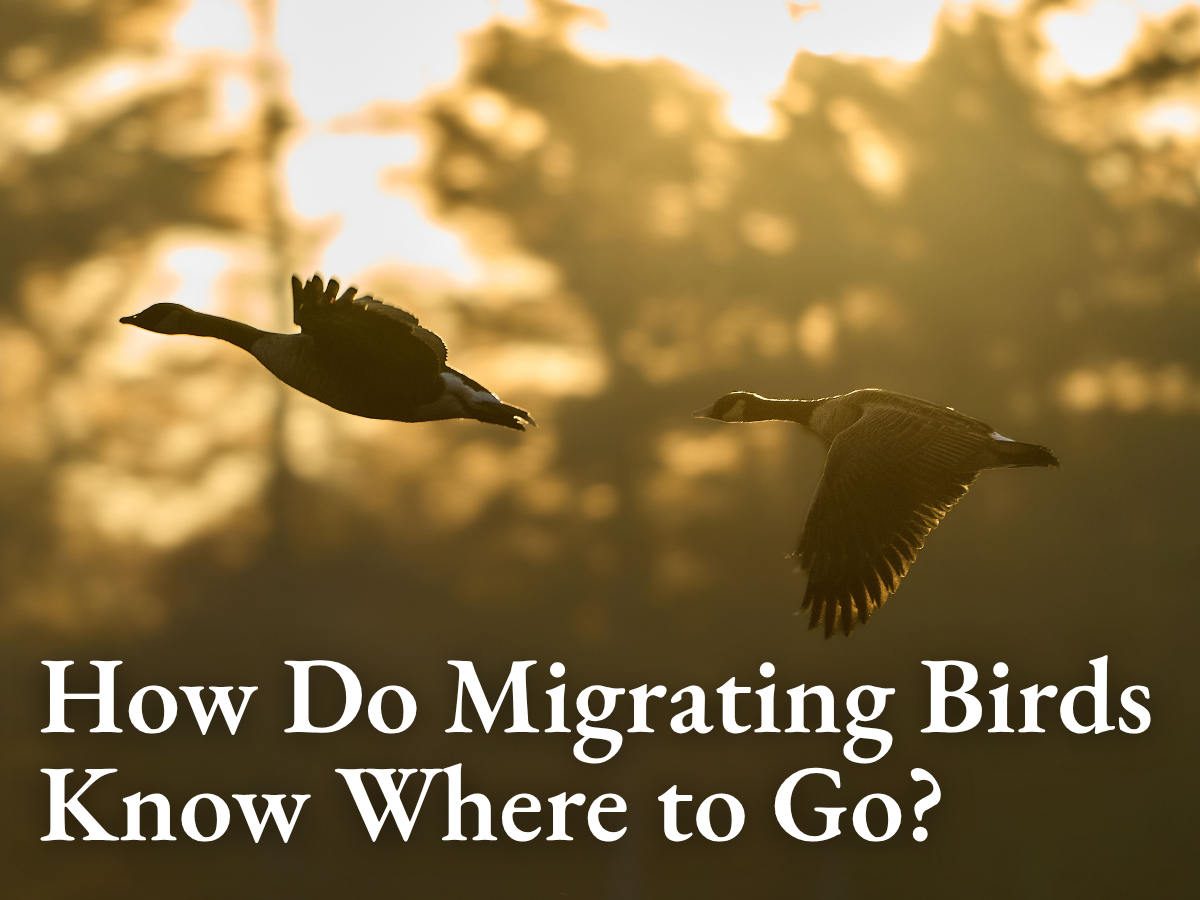
While some birds may travel 700 miles or so during migration, like hummingbirds across the Gulf of Mexico, others like Arctic Terns can travel upwards of 25,000 to 50,000 round trip each year as they make their journeys.
As another migration season draws to a close, you can’t help but wonder: Just how do they do it? How do migrating birds know where to go?
Just as you could refer to a map when making a long journey (and possibly, landmarks and memory, if you’d made the trip before) birds use different tools—innate, biological ones and external ones—to chart their migratory paths.
From using their “sun compass” and sense of smell, to perceiving the Earth’s magnetic poles through a magnetized mineral in their beak (yes, really), here is how migrating birds know how and where to go each year.
How Birds Know Where to Go When They Migrate
Mental Maps, or “Dead Reckoning”
Birds have fantastic memories. When some species, such as Black-Capped Chickadees, cache food away for winter, they can remember where they put their stores for several months, or even years after they hide them.
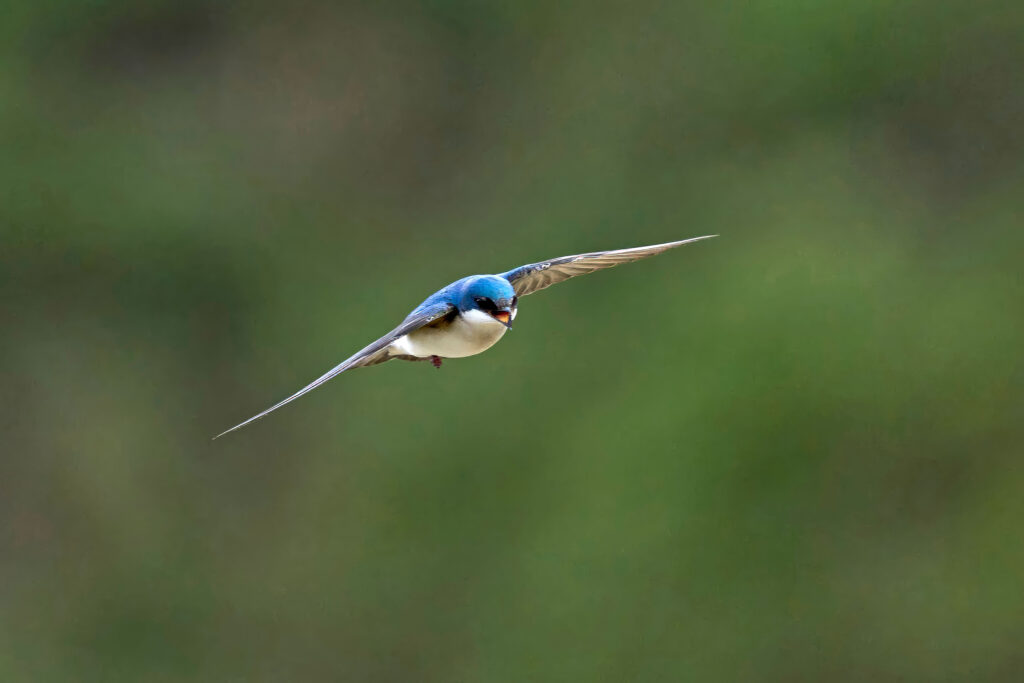
Birds’ memories come into play during migration, as well.
As they make their journeys, they have an innate mental map of how long to travel in a certain direction until they reach their final destination—otherwise known as “dead reckoning.” In fact, some birds have this innate sense from a very early age.
As part of a U.S. experiment published in 2007, researchers moved White-Crowned Sparrows from their typical starting position, and while the more seasoned adult birds were able to re-orient their positioning, the younger birds flew their pre-charted distances and ended up at a different destination.
Earth’s Magnetic Field & Their “Quantum Compass”
The way certain superheroes have x-ray powers and the like? Birds have unique proteins in their eyes that enable them to perceive and navigate Earth’s magnetic fields when blue light hits the protein. Talk about a superpower!
Also, their beaks serve as somewhat of a compass, containing an iron-based mineral that enables them to sense Earth’s poles. So, similar to the way a compass works—with its magnetized needle orienting in relation to the Earth’s magnetic field—birds use this to sense any changes in the Earth’s magnetism, which helps to orient themselves on the planet, explains an analysis from the Cornell Lab of Ornithology.
Also, birds have specific proteins in their eyes that enable them to perceive magnetic fields when blue light hits the protein.
Their “Sun Compass”
For centuries, people have relied on the sun and shadows cast by it to navigate, tell time, and gauge the seasons.
Similarly, birds utilize the sun’s position to navigate their migration routes.
But how, exactly, do we know this?
An experiment from the 1950s evaluated a group of contained European Starlings to see how they’d navigate when the sun’s position was shifted, which the researcher did by moving a mirror strategically.
In doing so, he found that the starlings responded by orienting toward the mirror “sun,” but flying in the wrong direction—effectively finding that the birds heavily relied on the sun for navigation.
Along with this “sun compass,” birds also rely on their own circadian rhythms to orient during migration. For instance, contained European Starlings exposed to a fewer amount of hours of sunlight simulated a different season—causing them to, again, fly in the wrong direction, continues the aforementioned analysis from the Cornell Lab of Ornithology.
Polarized Light
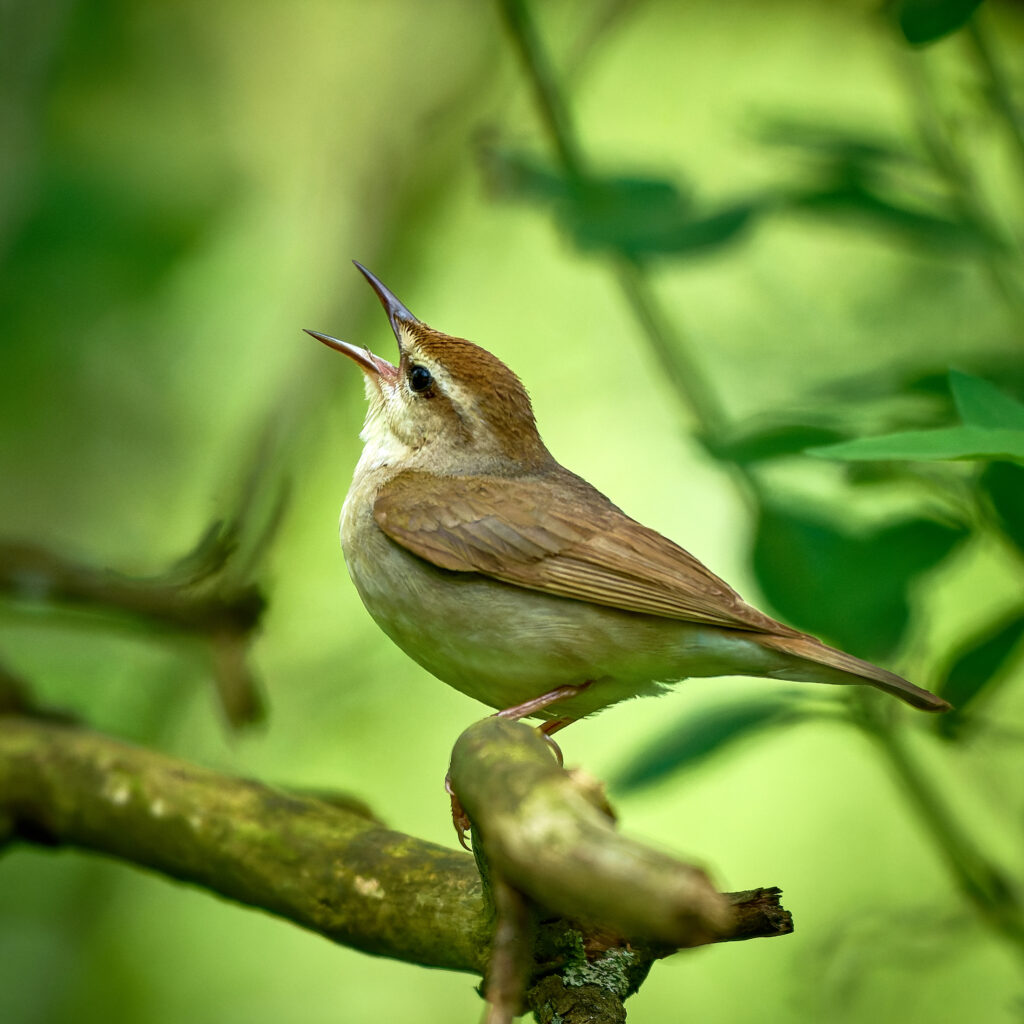
Even on cloudy days, birds have innate biological tools to help determine the location of the sun: namely, using polarized light.
When light comes from the sun and enters Earth’s atmosphere, it scatters in multiple directions and becomes polarized. Birds are able to perceive the different directions of this light and use this sense to locate the sun for their navigation, even if it’s not directly visible.
Also, while birds also rely on the Earth’s magnetism during migration (more on that later), this is not always a perfect method, since the planet’s poles are imperfectly aligned—which can lead to misdirection. So, birds recalibrate by relying on polarized light patterns at sunrise and sunset along the horizon.
Their “Star Compass”
There’s no question that the sun plays an important role for migrating birds. But what happens at night time when there is no sunlight?
Birds also rely on the stars—or their “star compass”—to navigate in the dark.
In a different experiment, researcher Stephen Emlen placed groups of Indigo Buntings in a planetarium in 1967 to study the effects of the stars’ positions on bird navigation.
He raised one group surrounded by a view of the constellations, and one group without—finding that while the former oriented themselves in the appropriate direction, the latter became randomly oriented without a view of the stars.
A proper “star compass” is essential for birds to determine north and south directions, and accurately map their journeys.
Landmarks
Whether you’re the sort of person who navigates by “take a left at Scott Street” or “take a left at the big sign next to the yellow convenience store,” you use landmarks to navigate.
Birds are the same way.
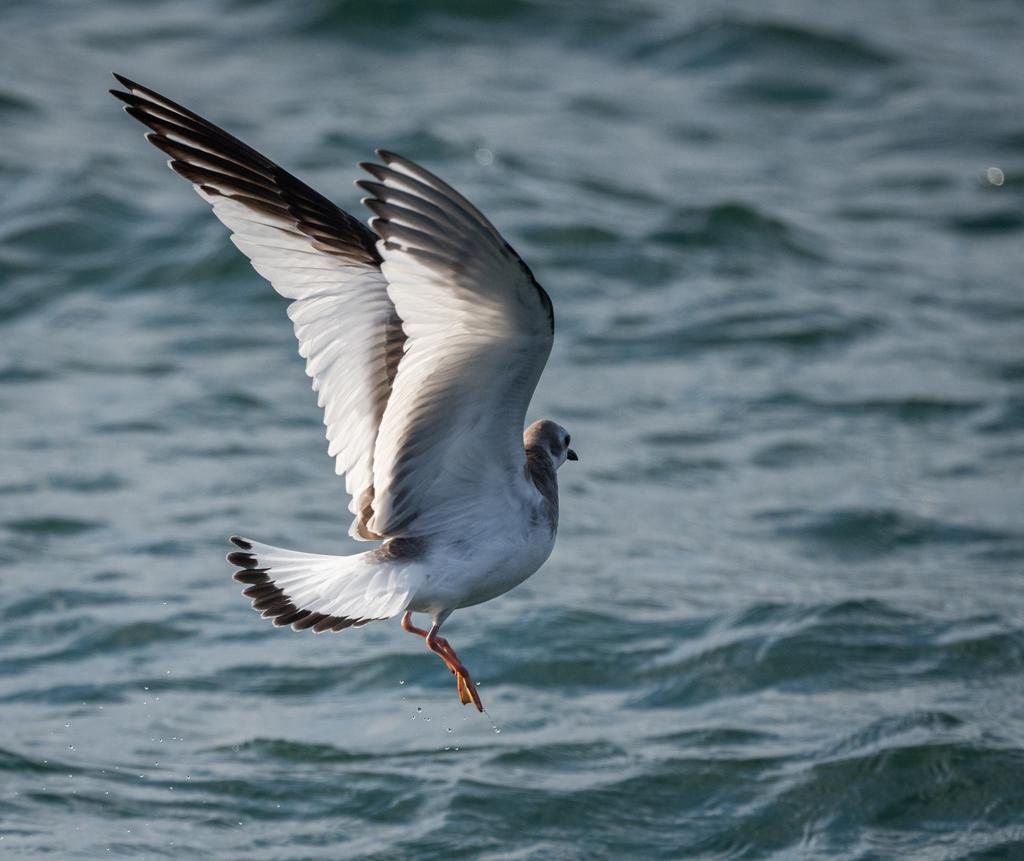
Whether by using large buildings or rivers and bodies of water, birds incorporate these points into their mental mapmaking.
Smell
However, some birds travel miles and miles over large stretches of ocean; what do they do?
A 2017 study finds they use their sense of smell—arriving after this conclusion after washing the nasal passages of a group of seabirds with zinc sulfate (an otherwise harmless substance) to temporarily block their smell receptors, and finding that they became disoriented compared to the group that could smell.
How to Help Birds—During Migration Seasons & Beyond
These innate biological and external tools are essential in helping them fly safely and make it to their end destinations.
But while birds have migration down to a science after years of evolution, there are a few simple, easy ways we can help support them on their journeys.
As another migration season draws to a close, these tips can help birds during migrations, and year-round:
- Turn off bright lights at night. This is a big one, since birds are using the night sky to navigate and orient themselves in migration periods (August 15–November 15 and April 15–May 31). Consider going Light Out by turning off bright lights after 8 p.m. during migration season especially, but year-round if you can.
- Make your buildings & windows bird-friendly. When birds see large, expansive panes of glass, they mistake this as open sky and are prone to flying into it. As a solution, add decals, clings, or paracord to windows to interrupt these glass panes—letting birds know not to “fly through” them.
- Plant native plants! When adding to your gardens, consider implementing plants, flowers, bushes, and trees that are native to your area. Since these plants have “co-evolved” with surrounding birds and insects, doing so helps support nature’s balance and provides birds food and places to nest during migration and year-round.
- Curb harmful rodenticide use. According to a 2020 study from Tufts Wildlife Clinic at Cummings School of Veterinary Medicine, 100% of red-tail hawks admitted were found to test positive for rodenticides. To protect the food chain, consider alternatives such as snap traps.
- Keep cats indoors. We know’ em. We love ‘em. There’s no question cats are lovable companions, but when left unsupervised, they can be harmful to birds and other animals. Keep cats indoors or on “catios” to minimize the amount of birds harmed during migration, and all season.
If you’d like to learn more about how to make your community safer for birds, visit the Buffalo Audubon and Bird-Friendly Buffalo websites and join our community! Stay updated on upcoming Bird-Friendly Buffalo programs and events, related reading, and so much more!
You can also take the Bird-Friendly Buffalo pledge to support Buffalo becoming a bird-friendly city, or schedule a program with a Buffalo Audubon expert to learn more about tangible solutions for making your business or community safer for birds.
Buffalo Audubon leads and inspires Western New Yorkers to connect with and protect the natural world through bird-focused activities, advocacy, and habitat restoration. Our organization launched the Bird-Friendly Buffalo movement in 2025, to help raise awareness and guide communities with practical solutions to build a city where birds can thrive.
Leave a Reply