
how to start bird watching:
Are you interested in starting birding, but don’t know where to start?
Bird watching is as simple as observing a bird around you. So, if you’ve done that recently, then congratulations! You’re officially a birder.
As birding continues to grow as a hobby, especially in recent years, there are certain tools—from binoculars to mobile apps such as eBird and Merlin—that make it that much easier.
In this guide, we’ll review our essentials for anyone who’s just getting started on their birding adventure, including recommendations for choosing the best binoculars for you, how to use the eBird birding app, tips and best practices for birding and feeding birds, information on local birding groups, and more.
Let’s begin!
Where Do I Start?
To start birding, simply go outside, look up, and notice any birds around. That’s it!
You don’t need to identify birds to appreciate them—but, if you are interested in learning more about the birdsong you hear or colorful plumage you see, there are apps for that. (Like anything else, right?)
Introducing: eBird and Merlin.
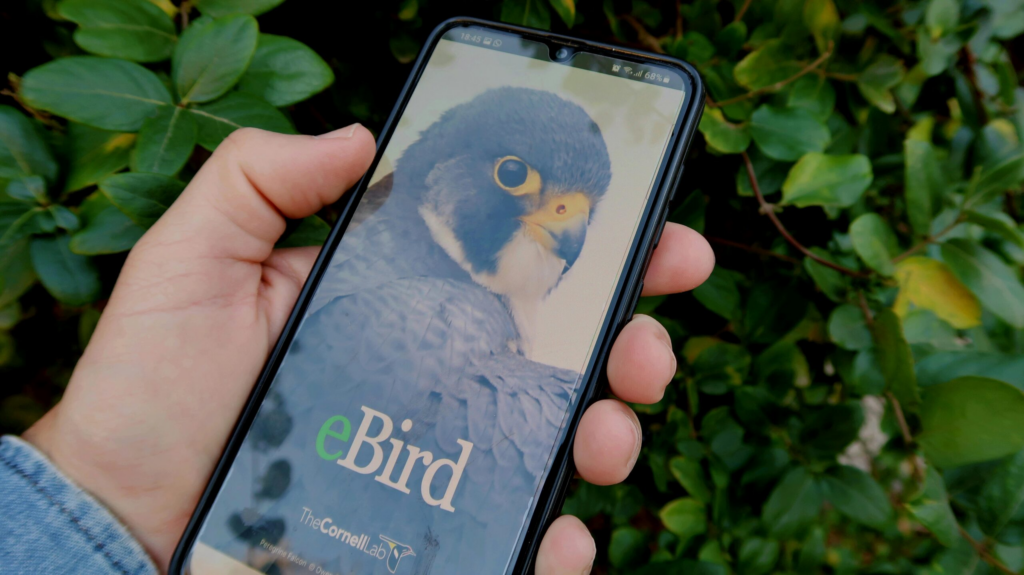
Developed by the Cornell Lab of Ornithology, these apps enable you to store logs of the birds you see, explore hotspots of bird activity, receive rare bird alerts, be notified about rare bird sightings near you, identify birds and bird calls, and so much more.
In fact, eBird is the largest biodiversity-related citizen science project in the world, enabling scientists to conduct population studies, anticipate spring and fall migration arrivals, and inform their conservation efforts, among other useful purposes.
Interested in getting started with eBird? It’s as easy as one, two, three:
1. Create a Cornell Lab Account
Whether you opt for the mobile app or desktop version, anyone who creates an eBird account will also have access to Cornell Lab’s other projects, including Merlin Bird ID, the Great Backyard Bird Count, Project Feederwatch, and Bird Academy. Just input a username, password, and email address, and download the local “bird pack” of species in your area to begin!
2. Explore Sightings & Hotspots:
Planning an upcoming birding trip or just curious about the birds recently seen near you? Tap the “Explore” tab and zoom in and out to show different areas with birding checklists (blue location pins) and hotspots (red location pins) to observe species lists observed in that location, broken down by “all-time,” “likely,” and “last seven days” filters.
3. Create a Birding Checklist
Now for the fun part—go birding! Start a checklist by opening the app and clicking the green button that says “Start checklist.” You can also input a list retroactively, if you lose service. Make sure to include details such as which birds you noticed, as well as where, when, and how you went birding.
Choosing the Right Binoculars
eBird isn’t the only tool that comes in handy on birding trips.
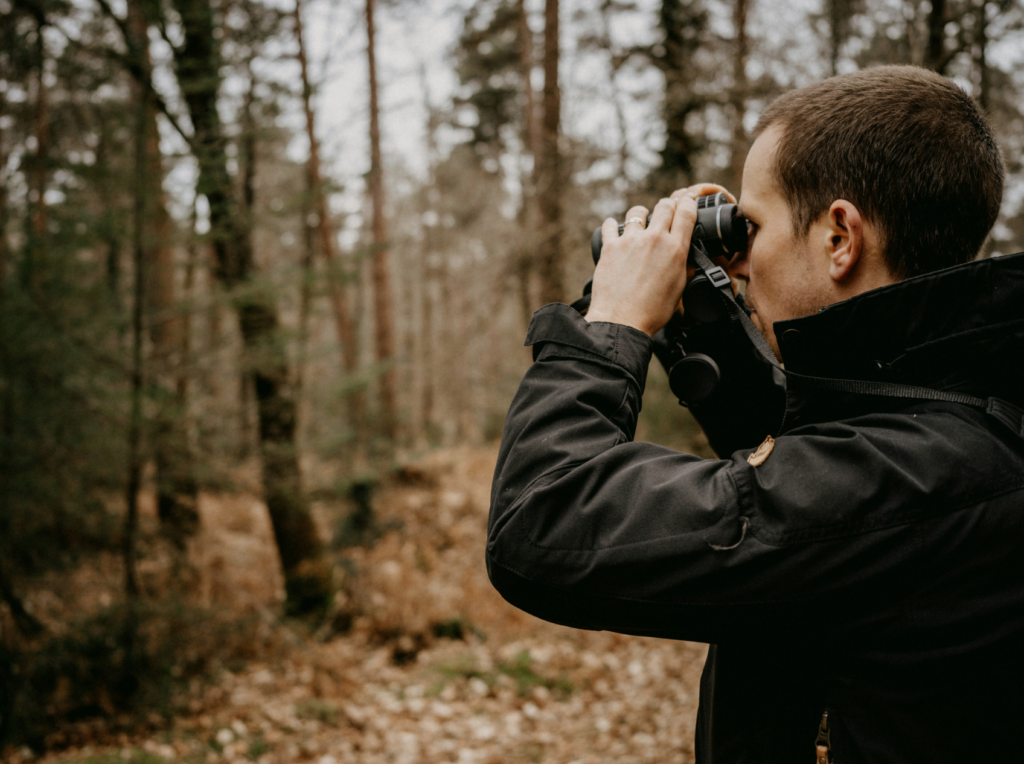
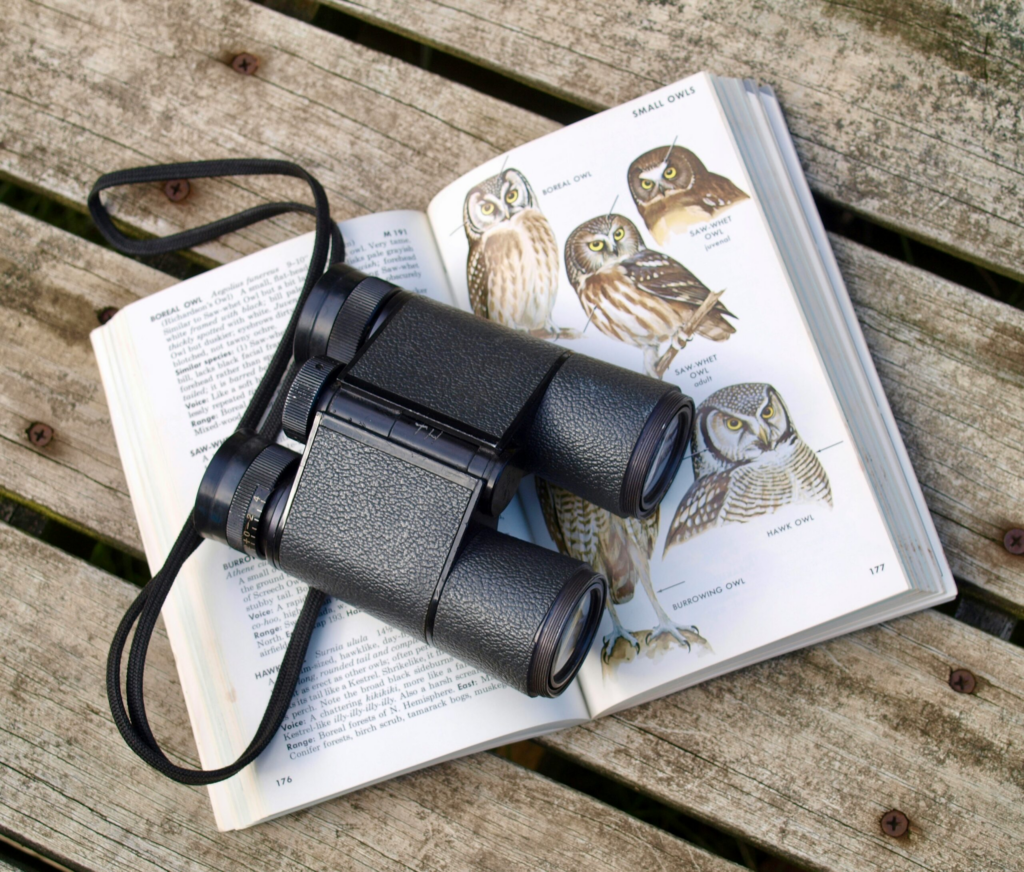
When you think of a birder, the visual probably doesn’t come without the image of a person holding a pair of binoculars, gazing up into a tree.
While it’s not essential to have binoculars when you go birding, it does make it a bit easier to see the birds on your trip more up close, without getting too close.
However, with the sheer number of brands and specificities that are out there, it can sometimes feel a bit daunting to choose the right pair of binoculars—or, to know where to start if you’re (understandably) not ready to commit to a purchase just yet.
Let’s demystify the process a bit.
When choosing the right pair of binoculars for you, we’d recommend considering three key factors to get you started: the specs, your birding habits, and your budget.
Here’s a quick overview of all three.
1. The Binoculars’ Specs
What are those two numbers written across the top of the binoculars’ bridge? (For example 10×42) The magnification (first number) and objective lens (second number, measured in millimeters) tell us about the binoculars’ strength and lens size, respectively.
A few rules of thumb with regard to binocular specs:
- The smaller the magnification power (8x), the smaller the range of vision, whereas higher magnification (10x) affords crisper detail and smaller range of vision.
- Binoculars with smaller objective lenses (30mm and lower) will be less bright and more portable, while larger objective lenses will be bulkier and have brighter images.
2. Where, When & How You Go Birding
Do you mostly watch birds around your backyard, or do you travel to places where the birds are a bit further away from you? Are you a night owl, or an early riser? Are your birding trips usually hikes, or do you enjoy staying in one spot?
Answering these questions help give a sense of which binoculars might be the best for you. For example:
- You’ll want to consider a lower (8x) magnification power and lower (30mm or less) objective lens size if you’d prefer to prioritize portability over long-range detail.
- Alternatively, choose a higher (10x) magnification and higher (42mm and above) objective lens size if you’d like to be able to see with more detail, and don’t mind if the load is a bit bulkier to carry.
3. Your Binocular Budget
Last but not least, we’d recommend trying before buying as much as you can before purchase—whether via a local library’s Library of Things, at places that sell binoculars, such as Buffalo Audubon’s Trillium Nature Center, or by asking other birders what works for them.
Plus, while it’s tempting to snag a pair of low-cost binoculars, we’d recommend investing somewhere in the $250-500 ballpark so you don’t have to replace them as often. This handy guide from National Audubon breaks down binocular recommendations by price point.
Bird Feeding Tips
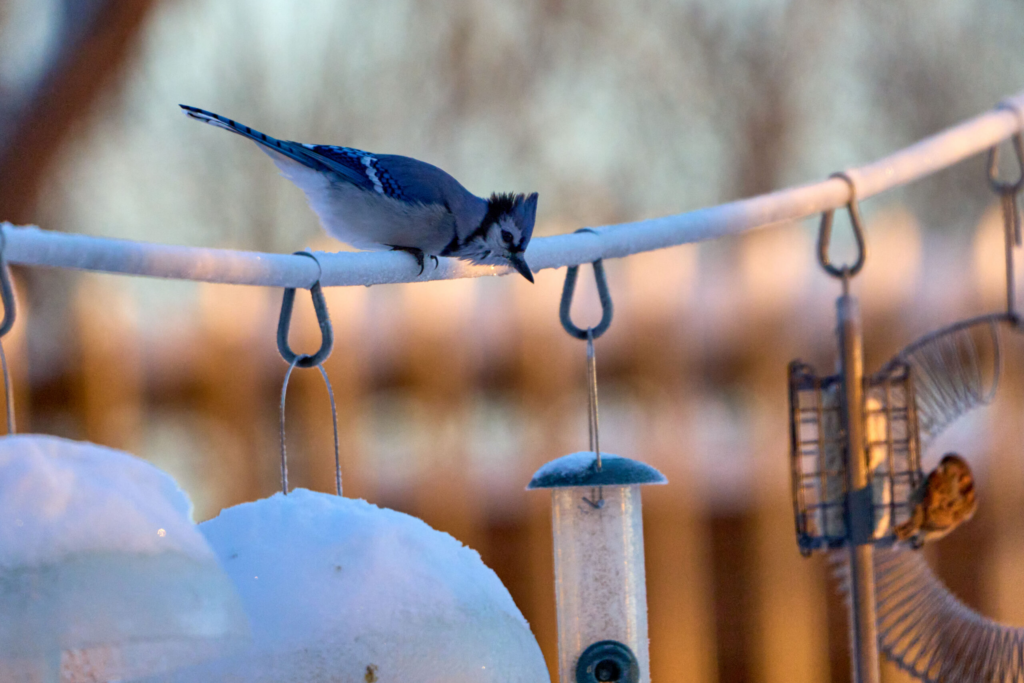
While some birders enjoy getting out and exploring in their search for birds, others might prefer to birdwatch from the comfort of their backyards.
If you have a feeder in your yard—and enjoy leaving it up through the winter months (which we’d recommend)—we’d recommend a few tips for feeding feathered friends through the winter.
Granted, birds don’t necessarily need our help braving the cold winter seasons, since they have done so for millions or years through a unique range of biological adaptations (more on that later). Regardless, putting out nutrient-rich foods in the winter helps them with an added consistent food source when it’s otherwise scarce.
Here are seven tips for feeding birds in the winter that we’d recommend, many of which apply year-round:
- Opt for Foods With High Fat & Oil Content: Peanuts, suet, black oil sunflower seeds, mealworms, and thistle seeds are great choices to help birds store up on their fat reserves.
- Stay Away From Serving Most Human Food: Speaking of, stay away from bread, Cheerios, crackers, and other human foods, which can be linked to malnutrition by causing birds to fill up, without providing energy. Go with citrus, berries, and apples instead.
- Clean & Monitor Regularly: Cleaning feeders once a week is a good rule of thumb to protect against mold and other bacteria.
- Fill Feeders at Morning & Evenings: This helps create a consistent food source for birds at times when they are already foraging for food.
- Put Out Water, Too: Although birds can eat snow to hydrate, doing so requires valuable calories to melt it to their body temperature. A heated water source helps.
- Position Feeders Well Off the Ground: This helps ensure squirrels or predators such as free-roaming cats can’t access the feeders—or birds.
- Grow Native Plants: Planning to include native plants in your spring gardens provides berries, insects, and other vital nutrients birds depend on, as well as brush where they can evade predators or use to build nests.
What if I want to learn more about birds?
As you’re birding, do you find you’re curious about not only the birds you see, but just how they do what they do?
For example, why do birds migrate? Which ones do and do not? How do they stay warm in the winter? Take the Redpoll, for example, which can survive in temperatures of up to 100 degrees below freezing.
curious to learn more about birds?
Check out our nature education programming at Buffalo Audubon, or sign up for our (free!) weekly newsletter, with informative blog articles like these filled with birding fun facts, best practices, and so much more.
In the meantime, let’s talk about a few of these questions: why birds migrate, and how they survive the cold winter months.
For one, birds might migrate to warmer climates—such as the Ruby-throated Hummingbirds and Red-winged Blackbirds that make the trip each fall—in lieu of sticking around for the winter.
But not all birds migrate; some brave the cold temperatures, and they do this through a unique combination of unique biological and adaptive behaviors.
Here’s how non-migratory birds stay warm during winter:
- Fluffing Their Feathers: This creates more air pockets that trap heat and provide natural insulation. Think of it like wearing a big, fluffy down coat.
- Regulating Body Temperature: Birds regulate their body temperatures endothermically—meaning they can control their core temperature independently from certain parts, such as their feet.
- Minding Their Feet: By lowering the temperature of their feet to approach freezing, but not reach it (avoiding hypothermia), birds can save energy they would otherwise spend fighting the cold to heat their feet. Plus, they have fewer nerve endings in their feet.
- Finding Shelter: Birds, like humans, hunker down in extreme cold—sometimes resorting to cuddle puddles to conserve heat, or nesting in cavities, tree holes, dense trees, or shrubs.
- Eating Extra Food: As birds have a metabolism that’s twice as fast as similarly-sized mammals, they eat extra seeds, nuts, sap, insects, and other foods to build fat reserves.
- Caching Food: Black-capped Chickadees sometimes stockpile thousands of nuts away inside a safe location to draw on when they need it—even several months or years afterward!
So, when you see birds at your feeders through the winter months, know that they’re using their evolutionary behaviors honed through the last millions of years to be there in front of you.
Interested in learning more? read our article:
Winter Birds: Which Birds Stay in the Cold & How They Survive

Birder Etiquette: Do’s and Don’ts to Consider
As you get into the swing of your birding trips—whether solo or with a group—there are a couple best practices you may notice across the board.
For instance, leave no trace, leash pets, don’t feed birds human food, and so on.
Because, ultimately, while birding continues to grow and evolve—with as many as 98 million Americans (three out of 10 people) actively engaged in the hobby—some things never change: namely, the best practices that help create a positive experience for both people and birders.
Here are a few birding do’s and don’ts we’d recommend to make it a great trip for you, and the birds:
Birdwatching Do’s
1. Observe wildlife from a distance.
2. Leave no trace.
3. Be conscious when photographing.
4. Keep pets on a leash.
5. Log observations responsibly.
Birdwatching Don’ts
1. Simulate bird calls with care.
2. Give nesting birds a wide berth.
3. Don’t feed birds human food.
4. Leave the feathers and eggs behind.
Interested in learning more? read our article:
Birder Do’s and Don’ts: 9 Tips for Respectful Birdwatching
Go Birding With a Group
Another great way to learn more on your birding adventure and meet others excited about bird watching is by joining a local birding group.
Whether you’re new to birding or a seasoned pro, Buffalo Audubon offers weekly Friday morning birding tours all across Western New York where you can learn more about birds with our experienced guide, Senior Naturalist Tom Kerr, meet new friends, and explore nature throughout Buffalo.
If you’re not from the Western New York area, no worries! There are many ways to find local birding groups near you, since you can see birds almost everywhere—from your backyard and local parks to nature preserves and forests.
From Beaver Meadow Nature Preserve, where we have our Trillium Nature Center headquarters, to the New York Power Authority Power Vista observation decks, our birding tours get enthusiastic birders out into the community each week—learning about birds and their habitats.
More About the Niagara River Corridor and Other Important Bird & Biodiversity Areas (IBAs)
Take the Niagara River corridor, for example, a globally-recognized Important Bird and Biodiversity Area (IBA) that’s right in the backyard of Western New Yorkers.
Important birding areas (IBAs) are for the birds
To learn more about Important Bird and Biodiversity Areas (IBAs) near you, explore BirdLife International’s interactive map tool.
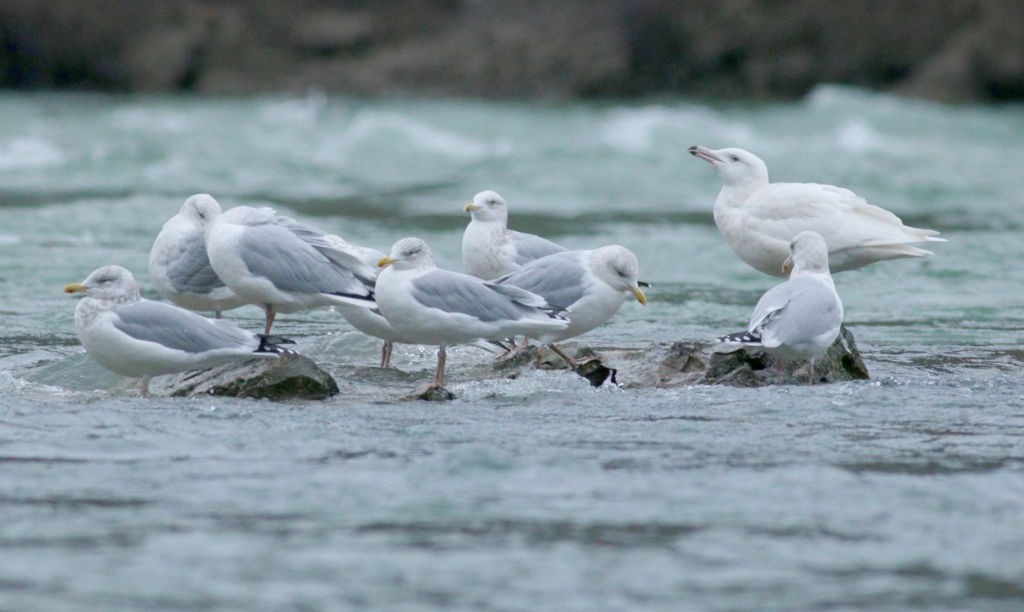
The Niagara River corridor, also known as the “gull capital of the world,” is a common setting for many of our birding tours at Buffalo Audubon—with well over 100,000 gulls found there during the winter, taking advantage of its open water and abundant resources.
As some birds migrate for the winter, certain places like these serve as essential stopover habitats where they can rest and find food.
There have been 19 species of gulls reported in the Niagara River corridor to date, including the Ring-billed Gulls, Herring Gulls, Lesser Black-backed Gulls, and the area’s largest gull, the Great Black-backed Gull.
Notably, 25% of the global population of Bonaparte’s Gulls flies through the Niagara River corridor on their southern migration journey—relying on the 35 miles of river to survive the winter months.
If you do visit this IBA, you can’t miss the Bonaparte’s Gulls, often found near the fast-moving waters off Unity Island and in the Niagara River Gorge. If you’re looking for larger gulls, or for more great views on your trip, some of the best spots are on the rocks in the rapids above Niagara Falls and below the Robert Moses Dam. The New York Power Authority Power Vista observation deck is also open year-round, providing scenic views of the feeding gulls below.
If you’re planning a birding tour or joining one with a group, and are local to the Western New York area, the Niagara River corridor is a great place to start.
Interested in learning more? read our article:
The Niagara River: An Important Area for Migrating Gulls
To join our group of enthusiastic birders, just register for an upcoming birding program on a Friday or Saturday that works for you! We’re excited to share your next birding adventure with you.
Buffalo Audubon leads and inspires Western New Yorkers to connect with and protect the natural world through bird-focused activities, advocacy, and habitat restoration. Visit our website to stay updated on all things birding—from upcoming programs and events and weekly (free!) tips and best practices in our weekly newsletter The Early Bird, to discounts and other perks that come with a Buffalo Audubon membership, and so much more.
Our organization launched the Bird-Friendly Buffalo movement in 2025, to help raise awareness and guide communities with practical solutions to build a city where birds can thrive. Learn more on its website or join us in person or on Zoom for our expert-led Bird-Friendly Buffalo Symposium at 6:30 p.m. April 23, 2026!
Leave a Reply