
There are moments in the life of a nonprofit organization when everything begins to accelerate.
The mission sharpens.
The work expands.
The expectations rise.
And leadership—true leadership—matters more than ever.
Buffalo Audubon is in one of those moments.
For more than a century, this organization has stood at the intersection of people, nature, and responsibility. Founded in 1909, it began with a clear and courageous purpose: to stop the use of wild bird feathers in fashion. At a time when such advocacy was far from popular, it took conviction—and leadership—to raise a voice for birds that could not speak for themselves.
That spirit has never left.
In the 1950s, a generous act of philanthropy created what would become the heart of our work: the Beaver Meadow Nature Center, ensuring that generations of children and families would have access to nature, education, and discovery.
In the 1970s, as environmental awareness grew and the devastating impacts of DDT became undeniable, Audubon and its partners helped lead the movement that restored hope for species such as the Bald Eagle and other birds of prey.
And today, in 2026 and beyond, the challenges remain just as urgent—only different.
As many as one billion birds are lost each year in North America due to building collisions, alone. It is a staggering number. But it is also a call to action.
And once again, Buffalo Audubon is answering that call.
Buffalo Audubon is entering one of the most important moments in its history—and we are inviting new leaders to join our Board of Directors.
This is a chance to help shape the future of nature education, bird conservation, and community impact across Western New York.
If you’ve ever considered board service—and care about nature, education, and the future of our region—this may be your moment.
The Bird Friendly Buffalo Movement
2026 marks a defining step forward.
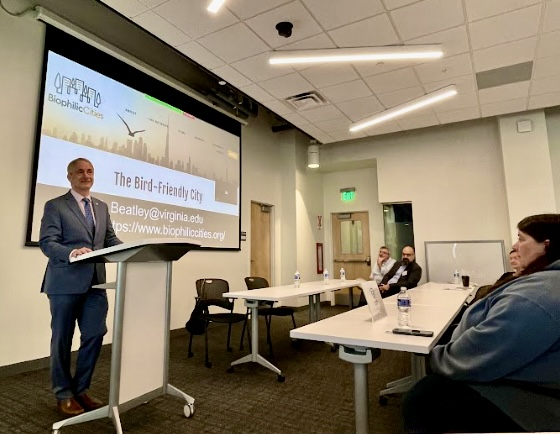
Last year, Buffalo Audubon launched the Bird Friendly Buffalo movement—a coordinated, region-wide effort to make Buffalo a bird-friendly city by supporting its communities in cultivating bird-friendly programming and infrastructure that helps birds thrive.
This work is real. It is measurable. And it matters.
- Lights Out initiatives will help darken our skies at night, allowing millions of migrating birds to pass safely through our region—one of the world’s most globally significant bird corridors along the Atlantic Flyway.
- Bird-friendly building practices, including glass treatments, will reduce deadly window collisions in both commercial and residential spaces.
- Native planting efforts will restore the ecological foundation that birds, insects, and wildlife depend on to survive and thrive.
- Educational programming introduces communities throughout Western New York with thoughtful, tangible ways to help birds.
- Annual Symposium events gather a consortium of experts to highlighting practical solutions for making Buffalo a more bird-friendly region. (Register and learn more about the 2026 Symposium here.)
Together, these efforts will not only protect birds—they will reshape how we live alongside nature in Western New York.
A Transformation Years in the Making
At the same time, something equally extraordinary has been unfolding.
Over the past five years, through the generosity of individuals, foundations, and public investment, Buffalo Audubon has quietly—but powerfully—transformed its campus.
Now known as Trillium Nature Center at Beaver Meadow Nature Preserve, more than $1.5 million in improvements has reimagined what a nature center can be.
Inside, a three-story experience is nearing completion:
- A nature library and historic collections, including original Audubon works dating back to the 1800s
- Live animal exhibits, including a resident Eastern Screech-owl
- Immersive learning spaces—from a walk-in beaver lodge to quiet hollow-tree reading areas
- Hands-on science exploration with microscopes connected to digital displays
Outside, the experience expands:
- Over 8 miles of trails through wetlands, meadows, and old-growth forest
- ADA-accessible pathways that ensure nature is available to all
- Storybook trails and whimsical spaces like Fairy House Lane for young explorers
And this summer, something truly one-of-a-kind will open:

A treehouse unlike any other, featuring towering trillium structures, suspended bridges, and giant nests, overlooking the beaver pond—designed with accessibility in mind so that more people can experience its wonder.
Later this year, a new Nature Playscape will further extend opportunities for discovery, creativity, and connection.
Every element—inside and out—has been designed with one purpose:
To connect people to nature in meaningful, lasting ways.
Why Board Service Matters—Right Now
This is where the story becomes honest.
Growth at this scale is exciting.
It is also demanding.
The next three years will likely represent one of the most significant periods of expansion and impact in Buffalo Audubon’s modern history—perhaps not seen since the early decades of its formation.
And that kind of growth requires something more than good intentions.
It requires:
- Thoughtful governance
- Steady leadership
- Willingness to engage in complex decisions
- And a shared commitment to moving forward, even when the path is not simple
Board service in this moment is not passive.
It is active.
It is meaningful.
And at times—it is challenging.
But it is also deeply rewarding.
Because this is the moment where:
- Vision becomes reality
- Investment becomes impact
- And leadership becomes legacy
Is This Work for You?
If you are considering board service, the question is not simply whether you are interested.
It is whether you are ready to contribute.
Ask yourself:
- Is nature education important to you—and to the people you care about?
- Do you believe your time, experience, and perspective could help solve challenges and create opportunities?
- Does working alongside others, united by purpose, feel like a meaningful way to give back and shape the future?
If your answer is yes, then you may already understand what makes this work so powerful.
What It Means to Serve
Every nonprofit board shares a common foundation:
- To advocate for the mission
- To contribute time, insight, and support
- To help strengthen financial sustainability
- And to bring energy, enthusiasm, and belief to the work
But something else happens—something harder to describe.
When you give your time, your talent, and your commitment, you receive a sense of purpose that endures.
An Invitation
This is one of the most exciting—and yes, one of the most challenging—times in our organization’s history.
And that is exactly why it matters.
If you feel called to be part of something that is growing, evolving, and making a measurable difference for birds, for nature, and for our community…
We invite you to reach out.
To learn more.
To step forward.
Because moments like this do not come often.
But when they do—they shape everything that comes next.
Make an impact with the buffalo audubon board
This is a chance to help shape the future of nature education, bird conservation, and community impact across Western New York.
If you’ve ever considered board service—and care about nature, education, and the future of our region—this may be your moment.
Email Ed Sirianno at ed@buffaloaudubon.org to learn more.
Buffalo Audubon leads and inspires Western New Yorkers to connect with and protect the natural world through bird-focused activities, advocacy, and habitat restoration.
Our organization launched the Bird-Friendly Buffalo movement in 2025, to help raise awareness and guide communities with practical solutions to build a city where birds can thrive. Learn more on its website or by attending the annual Bird-Friendly Buffalo Symposium.
Leave a Reply