There are several factors to consider when selecting the right binoculars for you, namely the specs (magnification power and objective lens), your birding habits, comfort, and budget, among others.
In this guide, we’ll cover a range of factors to consider when choosing the right pair, plus where to find binoculars near you if you’re just getting started.
The Binocular’s Specs: What do those numbers mean?
Many birding binoculars have two numbers written across the top of the bridge, by the focus knob, or on the objective lens barrel: For example, 8×42 or 10×42.
First things first: What exactly do those two numbers mean?
These numbers, or specs, reflect the strength (magnification power) and size (objective lens diameter, in millimeters) of the binoculars.
The First Number: Magnification Power
The first number (the “8” in our 8×42 example) reflects the binoculars’ strength, in terms of its magnification power.
This number indicates how many more times closer these binoculars can see than the naked eye. (In this case, the binoculars can see 8 times as close as one would be able to without.)
A good magnification range for birding binoculars is 8x to 10x. The number you choose should be based on what and where you’re birding:
- When should I choose 8x magnification? A lower magnification (8x) enables you to view subjects with a wider range of vision, ideal for scanning—such as in your backyard or in a forest.
- When should I choose 10x magnification? However, higher magnification (anything 10x and above) affords a more detailed view, but with a smaller range of vision—a good choice for if you’re birding from further away, such as in large, open spaces.
Tip: Just because you choose binoculars with lower magnification power does not mean your focus will be blurry or lower quality. Higher (10x) magnification affords greater detail, but it can also be more challenging to hold your images steady.
The Second Number: Objective Lens
The second number (the “42” in our 8×42 example) indicates the binoculars’ lens size (objective lens), measured in millimeters. Binoculars with larger objective lens size will make objects in your view appear lighter, and your binoculars will be heavier. In turn, binoculars with smaller objective lens size will make objects in your view appear darker and they will be a bit lighter.
Tip: Just because you choose binoculars with lower objective lens size (smaller than 30mm) doesn’t mean they will perform poorly; it simply means they prioritize portability versus the brightness of larger objective lens sizes (42mm and above), which are more ideal for dusk and dawn birding.
Where, When & How You’ll Go Birding
With your specs in mind, it’s also important to consider where, when, and how you’ll use your binoculars before choosing the right ones.
1. Where will you be going birding?
Do you mostly watch birds in your backyard? In the forest? With a group? At long distances, or close range? Answering these questions will help inform the right magnification power for you.
- Consider 8x power if you mostly stick to your backyard or other shorter-range birding trips, as a higher power might not be necessary.
- Go with 10x, by contrast, if you enjoy birding at a greater distance, or need that extra magnification.
Tip: If you live in an area with a wide range of natural scenery (such as the Great Lakes, Niagara Falls, etc.), you might want to go with the 10x magnification to afford better longer-range view.
2. When do you go birding?
Are you an early riser and night owl? Or, do you prefer to leave that to the actual owls, and go birding during daylight hours?
- If you’re birding at dusk/dawn, consider a larger objective lens size, which affords more light to your subjects.
- If you’re birding during daylight, you can go with a smaller objective lens size, since you might not need that extra light coming through.
3. How do you go birding?
Do you like to bird on an active hike through the woods? Or, do you enjoy sitting and looking at birds on your back deck? Do you need adjustable eye cups? Do you keep your binoculars in a backpack for your trip? Or, maybe, you wear them around your neck?
These are all factors to consider when weighing (literally) your needs to determine the right pair for you.
- If you prefer a lighter load on your birding trips, consider going with those having a smaller objective lens size, such as 30mm or less.
- If this isn’t as important to you, you might opt for binoculars with larger objective lens size (42mm and above).
Your Binocular Budget
As with the other factors to consider when choosing the right pair of binoculars for you, your budget will inform your pick.
If you’re just starting out, we’d recommend getting some trial runs in with different binoculars to see what you like best, if you can.
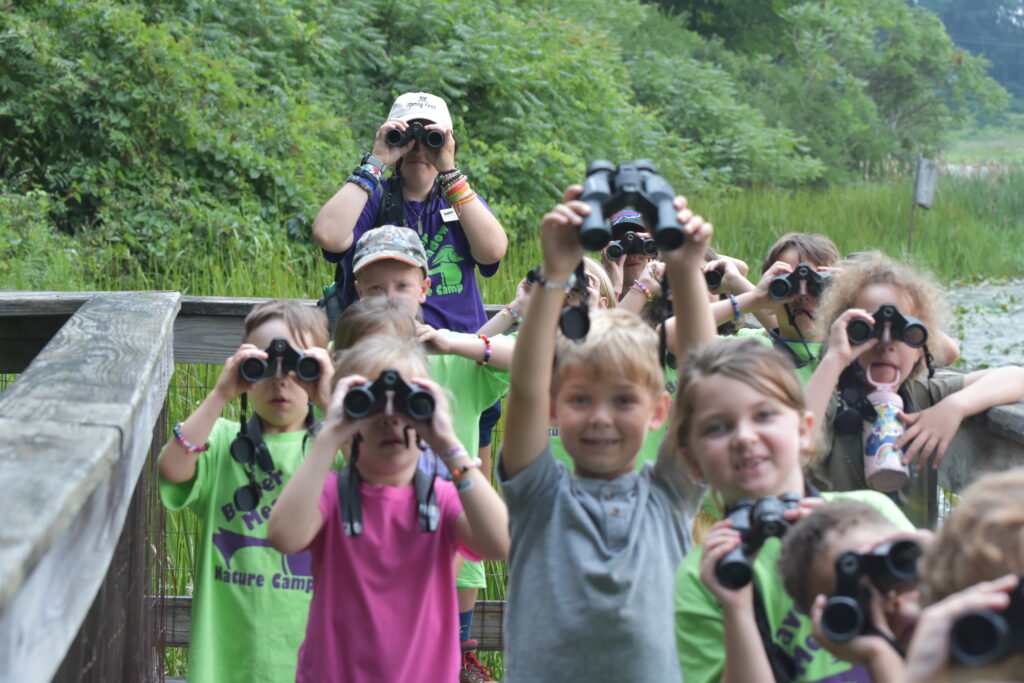
Some local libraries offer binoculars in their Library of Things, or you can test them out at places that sell them, such as Buffalo Audubon’s Trillium Nature Center headquarters. In fact, some birding programs, such as those at Buffalo Audubon, provide binoculars to participants upon request. Buffalo Audubon also provides new campers at its summer Nature Camp with binoculars, courtesy of Vortex Optics.
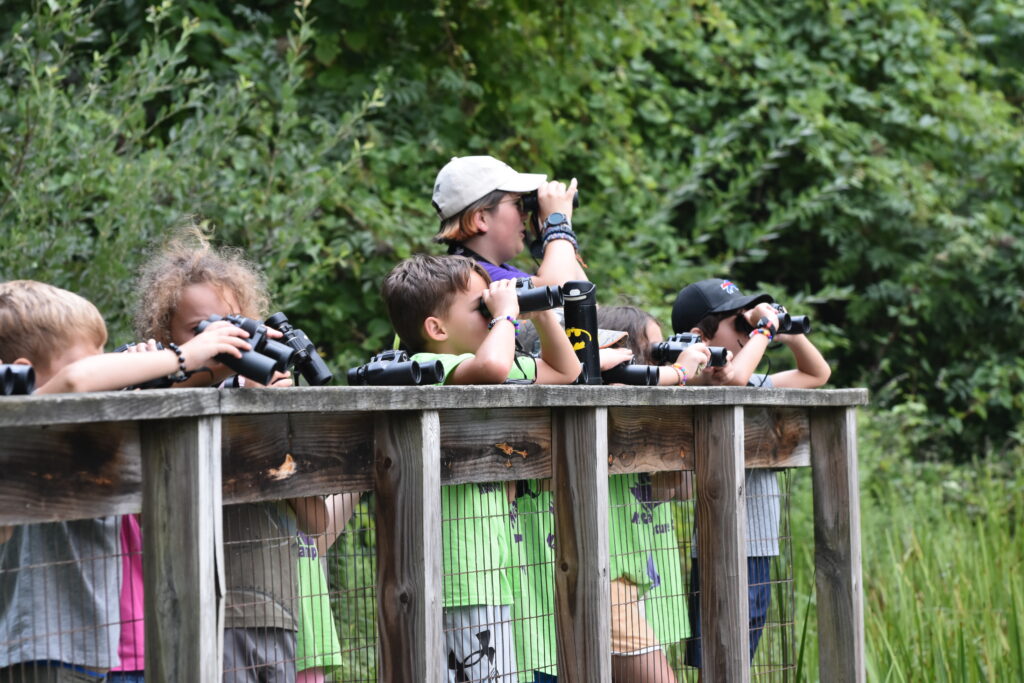
Along with doing this, we’d also recommend you talk to other birders about what they use and how they like it. Then, once you’re ready to invest in a pair, you can do so with an understanding of what works well for you.
Tip: While it might be tempting to pick a lower-cost pair of binoculars, it can be a good idea to invest in a pair that’s at least in the $250 ballpark, so you’re not replacing them every so often, says Buffalo Audubon Senior Naturalist Tom Kerr.
“If anything, you need better binoculars as a beginner,” Kerr says, who has facilitated hundreds of birding programs throughout Western New York via Buffalo Audubon. “You should consider you don’t want to buy them again anytime soon.”
While there are many options for binoculars out there, at varying price points, we’d recommend looking into those from Vortex and Leupold, to start.
“You can buy a good pair of binoculars in the $250-500 range, and you’ll get a view that’s about 95% perfect. That extra 5% of perfection, the price goes up exponentially,” he adds. “You’re barely going to see a difference unless it’s your job or you’re using them all day.”
Interested in learning more about birding? Join our weekly Friday morning birding programs at Beaver Meadow Nature Preserve. Visit our website to stay updated on upcoming programs and events, discounts and other perks that come with a Buffalo Audubon membership, and so much more.
Buffalo Audubon leads and inspires Western New Yorkers to connect with and protect the natural world through bird-focused activities, advocacy, and habitat restoration. Our organization launched the Bird-Friendly Buffalo movement in 2025, to help raise awareness and guide communities with practical solutions to build a city where birds can thrive. Learn more on its website or by attending the annual Bird-Friendly Buffalo Symposium.
Leave a Reply