Spring is a warm welcome of new life after the snowy, cold winters in Western New York. Each day that the sun pops through the gray sky, we enjoy its warm rays—the same rays that are enjoyed by all of nature.
Spring is also a time of new growth and rebirth for all living things, and by learning about native plants and invasives, we can help nature thrive during this beautiful season.
Here’s a look at a few native and invasive plants in Western New York, along with ways we can both enjoy and support nature in early spring.
Skunk Cabbage
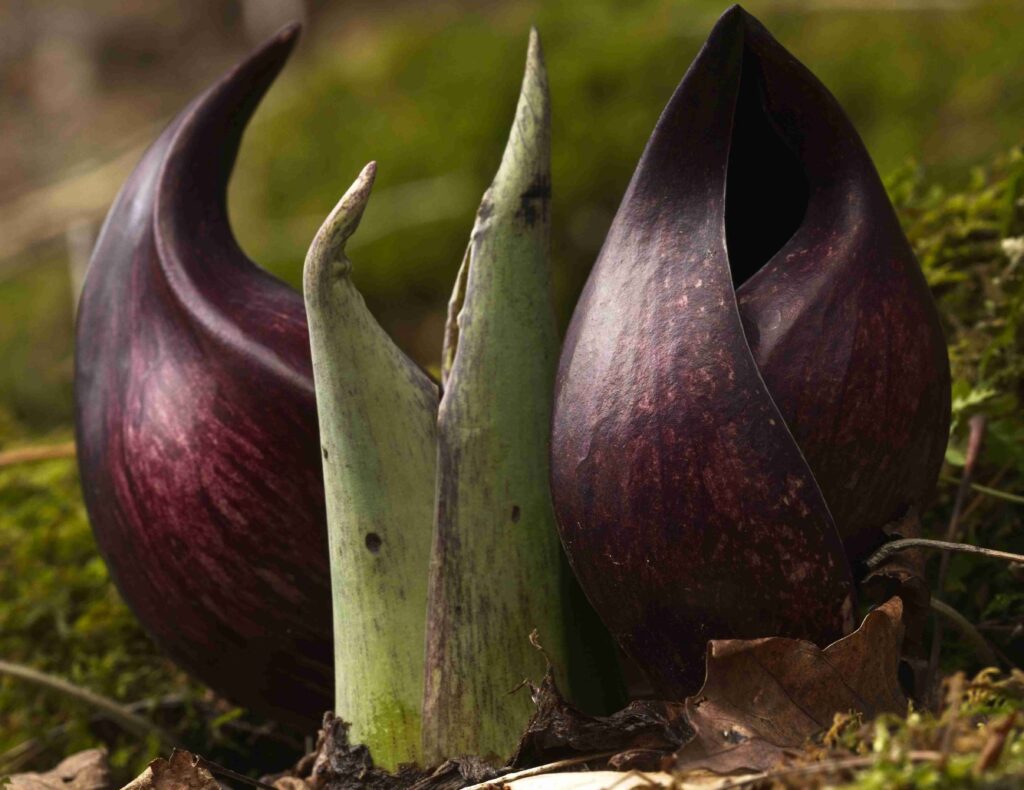
For nature enthusiasts, late winter and early spring are a great time to slush through the snow and cake some mud on the hiking boots. As we step outside on those first sunny days, snow is often still on the ground. Hiking a trail in a low wet area, you might simply see circles melted in the snow. With a second glance, you are likely to see skunk cabbage in bloom—a plant named for its odor, but often overlooked in its simplicity and beauty.
Skunk cabbage blooms from February to April, and is a deep reddish-purple color with spots ranging tan to green. The leaves form a hood protecting the delicate flower inside.
That circle of snow melted around the bloom is not accidental. Skunk cabbage, when in bloom, produces its own heat. The beautiful day that has attracted you to the outdoors has also caused some dormant insects to hatch, with few food sources available to them. Skunk cabbage will melt the snow and produce a rotting-meat smell to attract insects and pollinators to allow it to thrive.
The Trillium Flower
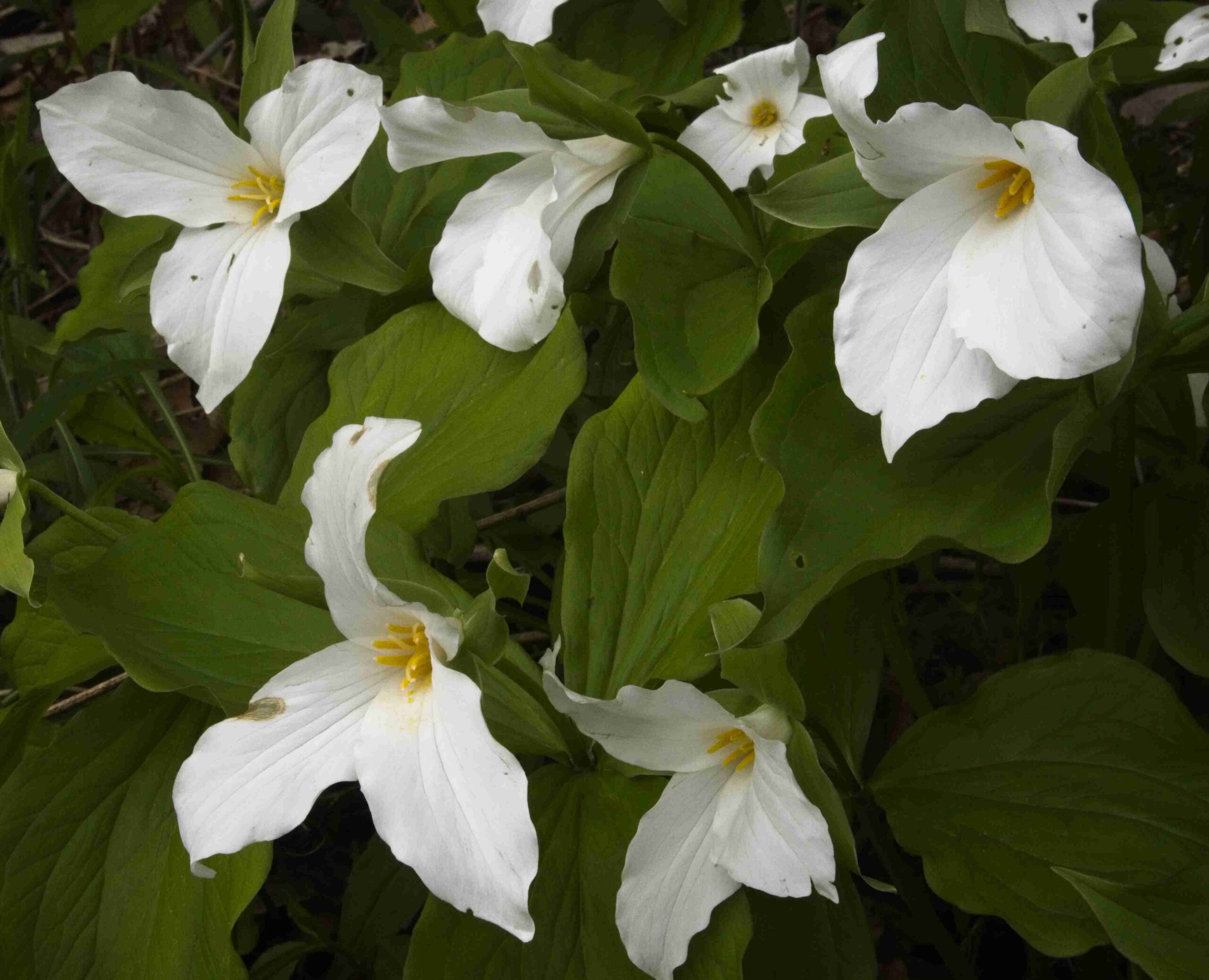
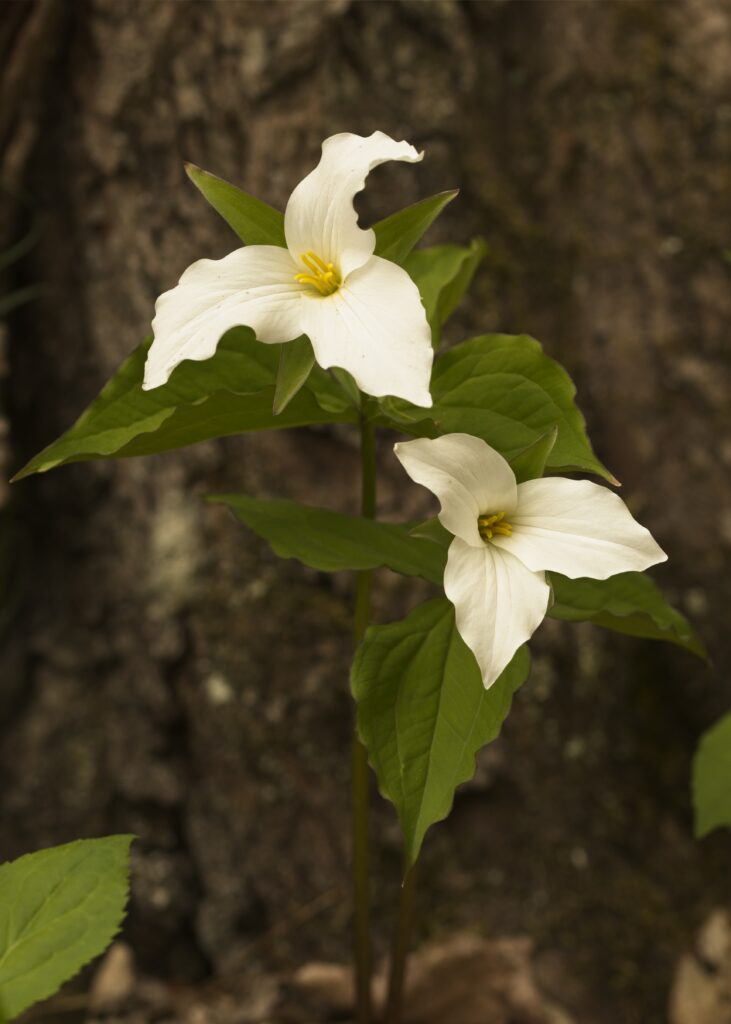
As April approaches, a hike through the forest can bring you upon a truly magnificent flower: the trillium flower. This flower, although simple in design, is very beautiful to look at. New York is lucky to be home to seven native trillium species—several of which are listed as endangered, with more listed as “exploitably vulnerable.” For this reason, these flowers are best left undisturbed.
The trillium flower also symbolizes rebirth and new beginnings, which played a role in Buffalo Audubon’s recent renaming of its nature center building from Beaver Meadow Nature Center to Trillium Nature Center.
Invasive Species
In the spirit of humans wanting to help nature, we have to mention invasive species.
Many invasive species were introduced because people liked the way that they looked. When hiking in early spring, if you see a shrub along the edges of roads and forest, there is a good chance it is the invasive plant honeysuckle.
Honeysuckle starts to leaf out before almost all other native species, and is also one of the shrubs that produces flowers. This is one of the reasons that people introduced it, so that they might have flowering plants earlier in the year—but this was done not knowing how easily it spreads.
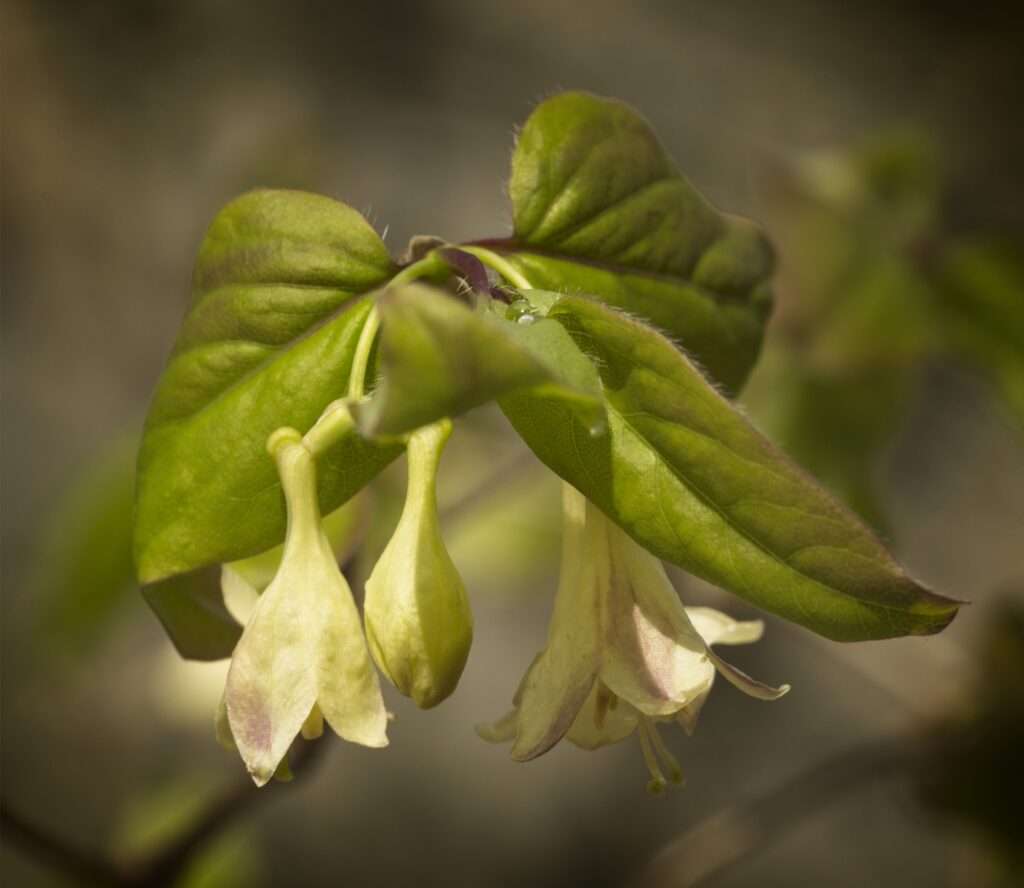
Granted, not all honeysuckle is invasive; take, for example, the American fly honeysuckle, which is a native plant, but looks like invasive honeysuckle. However, those that are negatively impact the environment around it by reducing plant diversity, monopolizing shade, displacing native plants, and providing berries of poor nutritional value.
The fruit that the honeysuckle plant produces is eaten by many animals, including birds, and therefore, widely dispersed. Honeysuckle, also being one of the first plants to grow in spring, means it has weeks of growth to shade out its competitors. A few of the native plants that are competing for this same space include spicebush and various dogwoods. These also produce a nice flower, but you have to be patient for them to bloom. They also produce fruit for wildlife to eat.
Spring is also a good time for management. The benefit of honeysuckle being an early grower is that it can help beginners with identification so they can prune as needed. Honeysuckle is a very resilient plant; If you just cut the top off, it will grow back from the roots. It also usually has a shallow root system, such that with all the spring rains, the soil is usually soft enough to pull most honeysuckle by hand. This is labor-intensive, but choosing to do nothing only allows honeysuckle to get big enough that you may have to use machinery or chemicals to treat it.
These methods, although they may be faster, come with their own drawbacks. Machinery is a quick fix. Most are only able to get the tops of plants, allowing them to come back from the roots. Machinery is also expensive to purchase or hire, and is not selective in nature. If a dogwood is growing one foot from a honeysuckle, the machine is likely to damage or kill both. Chemical treatment is another option, and one that can be done in several different ways. To chemically treat most selectively, you still have to cut the tops off the Honeysuckle, then spray the stump.
By learning more about the native and invasive plants in our own backyards, we can help support nature in this time of rebirth.
Buffalo Audubon leads and inspires Western New Yorkers to connect with and protect the natural world through bird-focused activities, advocacy, and habitat restoration.
Our organization launched the Bird-Friendly Buffalo movement in 2025, to help raise awareness and guide communities with practical solutions to build a city where birds can thrive. Learn more on its website or by attending the annual Bird-Friendly Buffalo Symposium.
Leave a Reply