

This fall, a love of birding will span across oceans and continents.
In October, a team from Buffalo Audubon and representatives from the City of Buffalo will make the 6,500-mile trip to Japan—bringing with them gifts of binoculars for adults and children, along with a spotting scope and tripod for bird watching. Along with these gifts, Buffalo Audubon will also collaborate with Wild Bird Society of Japan-Ishikawa to launch a series of nature education and conservation programs, as well as outdoor activities in the area.
The goal of these bird-centric initiatives? To continue fostering “Feathered Diplomacy” between the two cities in a landmark initiative made possible by a U.S.-Japan Global Impact Grant, recently awarded to the Japan Culture Center of Western New York.
“As an avid birder and nature lover, I’m proud that Buffalo has been selected to be one of the first recipients of the U.S.-Japan Global Impact Grant from the U.S.-Japan Foundation (USJF),” said Buffalo Mayor Sean Ryan. “Buffalo and Western New York are known for our natural assets, including our place along a major migratory bird flyway. This investment will help us protect those natural resources and expand environmental education so future generations can continue to appreciate and preserve them.”
But the trip itself is only the tip of the iceberg. It’s a continuation of a decades-long partnership between the sister cities of Buffalo, New York and Kanazawa, Japan that’s rooted in community, shared ecosystems—and birds.
Birds of a Feather: About the Kanazawa-Buffalo Sister City Connection
(Yacho ga Tsunagu Toshi)
Sister cities since 1962—and the oldest, continuous Japan-U.S. sister city relationship, at that—Kanazawa, Japan and Buffalo, New York have a long, rich history of celebrating each other’s cultures, from Buffalo’s participation in the Kanazawa Marathon to a series of commemorative artwork and murals dotting Buffalo, New York.
In fact, did you know Buffalo’s Japanese Gardens in Delaware Park were a gift from Kanazawa, Japan? It’s true! Modeled after the city’s historic Kenroku-en garden, the gardens were conceived in 1970, shortly after the sister city connection became official, as a symbol of friendship between the two cities. The final product—an iconic cornerstone of Buffalo’s culture—includes a replica of Kanazawa’s kotoji-toro, its two-legged stone lantern.
“Sister cities can serve as catalysts for change by bringing people together to experience different cultures and ways of thinking while in pursuit of a common goal: in this case, in sharing our mutual love for birds,” says Chris Morrison, President of the Japan Culture Center of Western New York—an area non-profit offering a wide variety of culture events and programs, such as the beloved Cherry Blossom Festival in these gardens. “With birds as great symbols of diplomacy themselves, I can think of no better way to kick off celebrations for our cities’ 65th sister city anniversary next year.”
Tom Kerr, Senior Naturalist at Buffalo Audubon, who will also be joining on the trip, echoed Morrison. “The idea is that there are people who love birds here, and there are people who love birds there. Why don’t we connect with Kanazawa, through birds?” says Kerr.
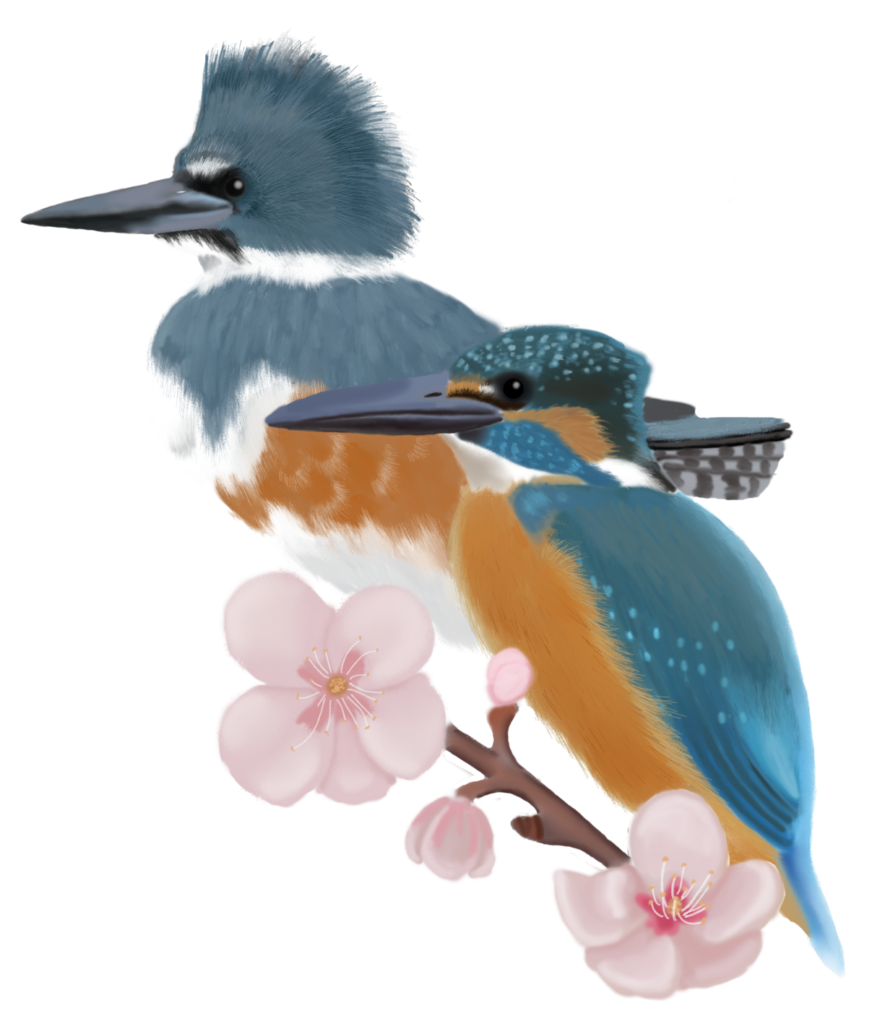
To boot, he adds, many of the birds in Kanazawa are found in Buffalo as well. “There are a lot of similarities between the two, even across the ocean,” he explains. “Herons, woodpeckers, chickadees, crows—all just like how we have here.” In fact, the two cities have named their official sister city birds accordingly: the Belted Kingfisher in Buffalo, and the Common Fisher—or Kawasemi—in Kanazawa.
But the similarities don’t end on this level. The two cities are also both globally-recognized International Birding & Biodiversity Areas (IBAs)—crucial flyways and stopover sites for migrating birds, in particular. For this reason, Feathered Diplomacy seeks to not only connect these two communities in culture, but also in conservation and advocacy, as well—building off of Buffalo Audubon’s Bird-Friendly Buffalo initiative begun in 2025 to make Western New York a region where birds can thrive.
To accomplish this, Feathered Diplomacy will engage citizens in both cities to foster best practices such as Lights Out campaigns, window treatments to reduce bird collisions, and more. Plus, the Japan Culture Center of Western New York will station a live stream between the cities on its website, so bird-lovers in Western New York can watch birds in Kanazawa.
“What is good for birds—land conservation, safe and thriving green spaces, native plants, clean air and water, and nature education—is also good for people,” Morrison says, “regardless of where they live.”
A New Legacy, Taking Flight
(Arata na Isan, Sono Tsubasa wo Hirogeru)
Beyond Buffalo and Kanazawa, alone, the team championing Feathered Diplomacy is hopeful the initiative can be a model for sister city partnerships globally, and an example of city-to-city and citizen-to-citizen collaboration in action.
“We are excited to share what we’ve learned about our birds with other people who love birds in our sister city of Kanazawa,” says Kerr. “We have an opportunity to share ideas on how we enjoy birds and protect their habitats, as well as ideas on how to help them safely migrate through our cities. Hopefully, this will lead to spreading our ideas on helping birds everywhere.”
This story originally was published in the Fall 2026 edition of The Outlook, a birding and nature magazine by Buffalo Audubon. Read more stories from The Outlook magazine online, or upgrade to subscribe and receive printed editions mailed right to you.