
For the sixth time since 2018, Buffalo Audubon led our winter Algonquin Provincial Park trip over Martin Luther King weekend. With 16 guests and Buffalo Audubon President Mike Radomski, we left early Saturday, Jan. 17 and headed north with two vans – and a playlist of my favorite Canadian bands.
Algonquin Park is about a four-hour drive from Buffalo and about two hours north of Toronto. It is an easy weekend destination if you love winter and you can find some unique birds just a little further north.
Whether you joined us on this past trip, are considering doing so in the future, or would like to visit the area yourself, here are some highlights from this year’s trip, with a couple recommendations for how we made the most of our time birding there.
First Stop: Bohemian Waxwings in Gravenhurst, Ontario
Our first stop was a short detour in the town of Gravenhurst, Ontario for a flock of over 100 Bohemian Waxwings that had been reported since December. Bohemian Waxwings are a larger cousin of our familiar Cedar Waxwings—identifiable by their chestnut brown undertail coverts and the yellow pattern on their folded flight primaries.
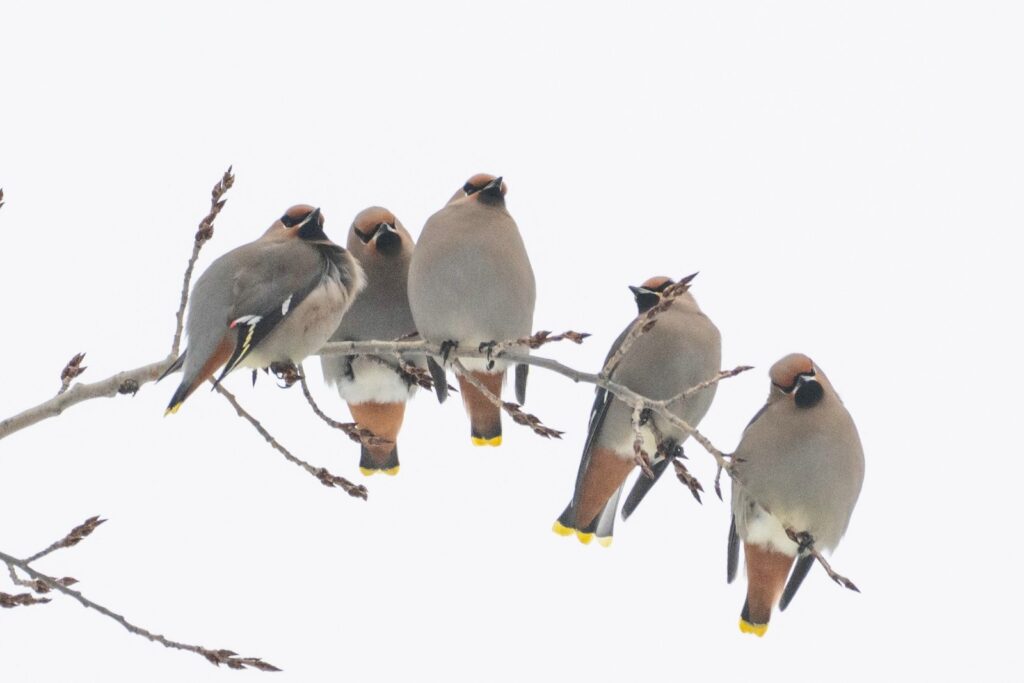
In the winter, they travel in large flocks in search of berries and fruit left on trees and shrubs. Sometimes we plan stops outside the park to try and break up the drive and see a special bird, but that doesn’t always work out.
Winter birds, especially Bohemian Waxwings, are notoriously nomadic and there is always a chance of not finding your target species. Fortunately, that was not the case during our first day!
As soon as we turned down the street where they were reportedly seen on eBird, we saw the flock of Waxwings in a bare tree. I counted 106 of them when they all settled down.
This was only the second time ever I had seen Bohemian Waxwings, and the first for almost everyone on the trip.
We stayed for about 15 minutes, watching them feed on crabapple trees before they flew into a nearby park and disappeared.
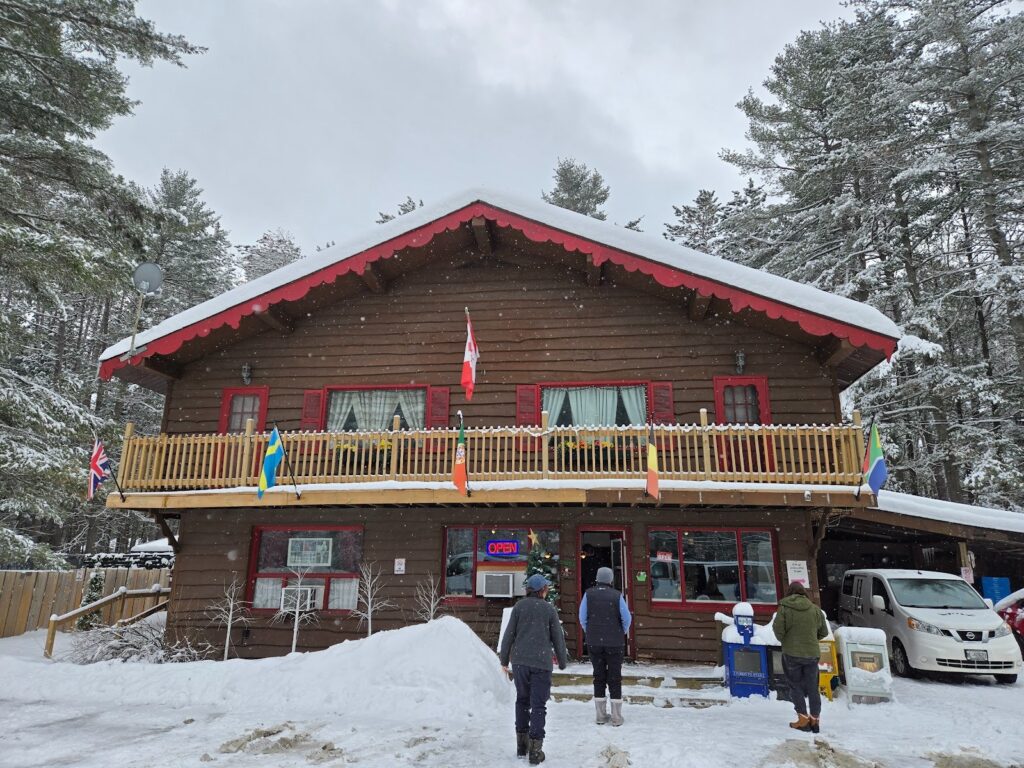
Back on the road, we stopped at Henrietta’s Pine Bakery in the town of Dwight to pick up our lunch. If you are on your way to Algonquin Park, Henrietta’s is the place to stop for a turkey sandwich with cranberry chutney.
Henrietta’s Pine Bakery – Photo by Steph Foraker
Pine Grosbeaks: A Life Bird for Many
Our first stop inside the park was at the Algonquin Park Visitors Centre to change into our cold weather gear and check out the birdfeeders. This was a relatively mild day for Algonquin, at only 28 degrees Fahrenheit. (The last time we were in Algonquin Park, it was 50 degrees colder, at -22 degrees!)
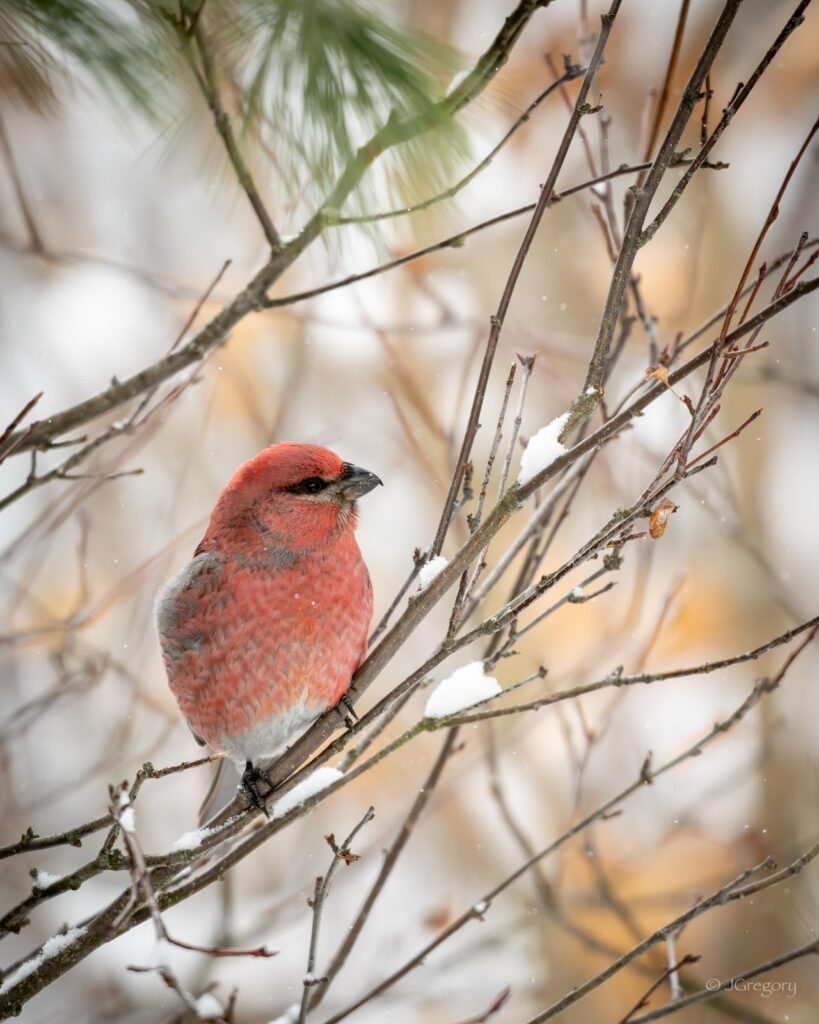
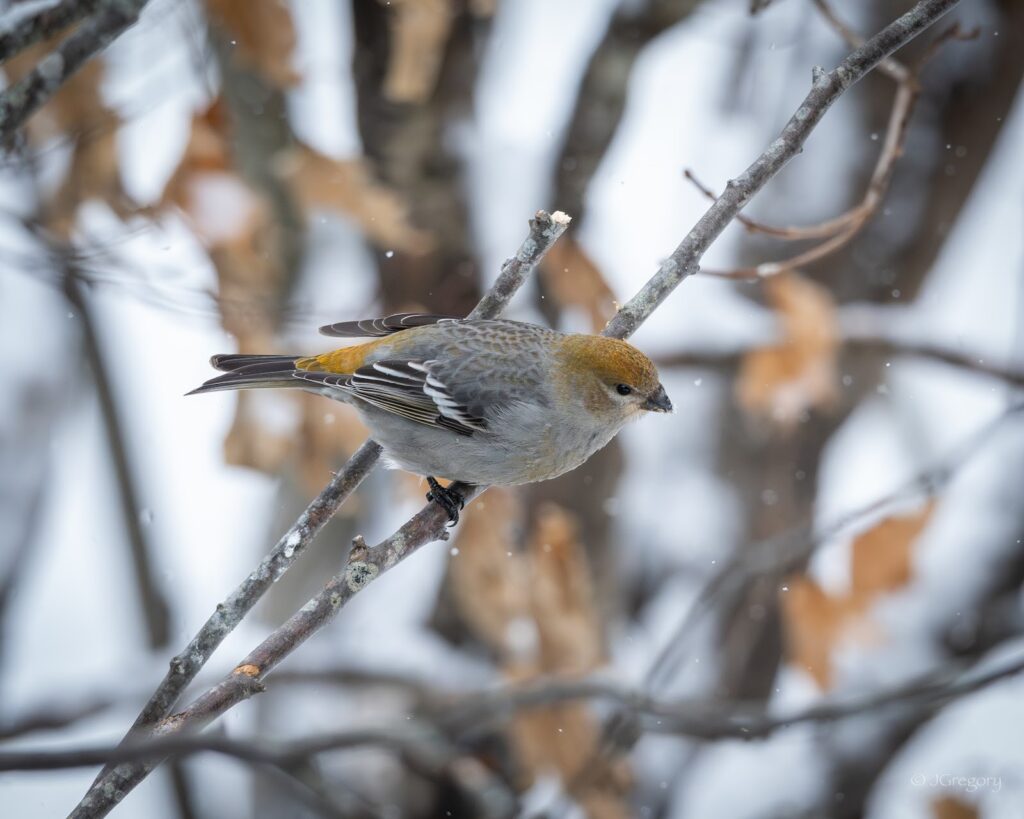
We went out to the observation deck of the visitors centre to find Pine Grosbeaks—a bird we were expecting to see. Algonquin Park hosts a livestream of their birdfeeders in winter that you can see here, so we had a pretty good idea of what would be there. Out of our five previous trips to Algonquin, we had only seen Pine Grosbeaks once. This was another life bird for many of us, and we were treated to great views of both the males and females.
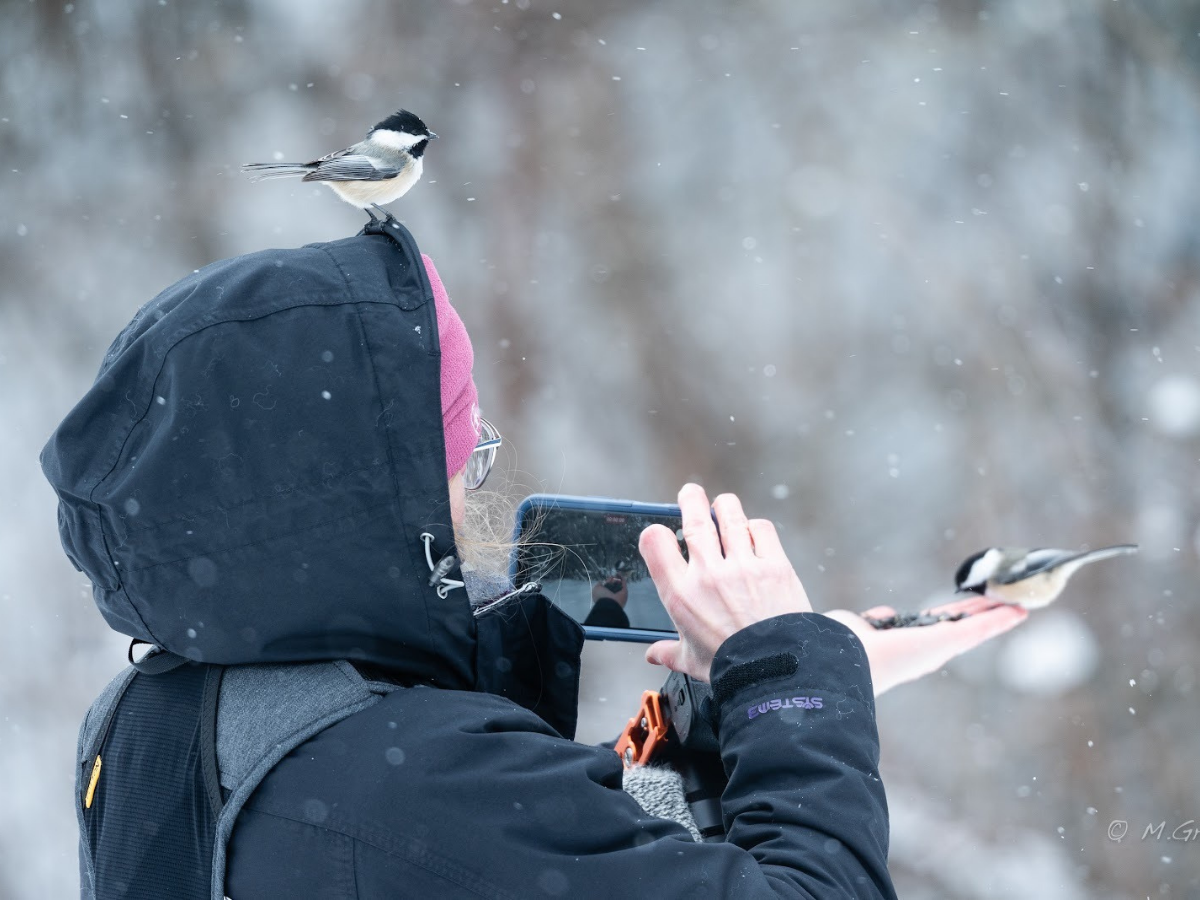
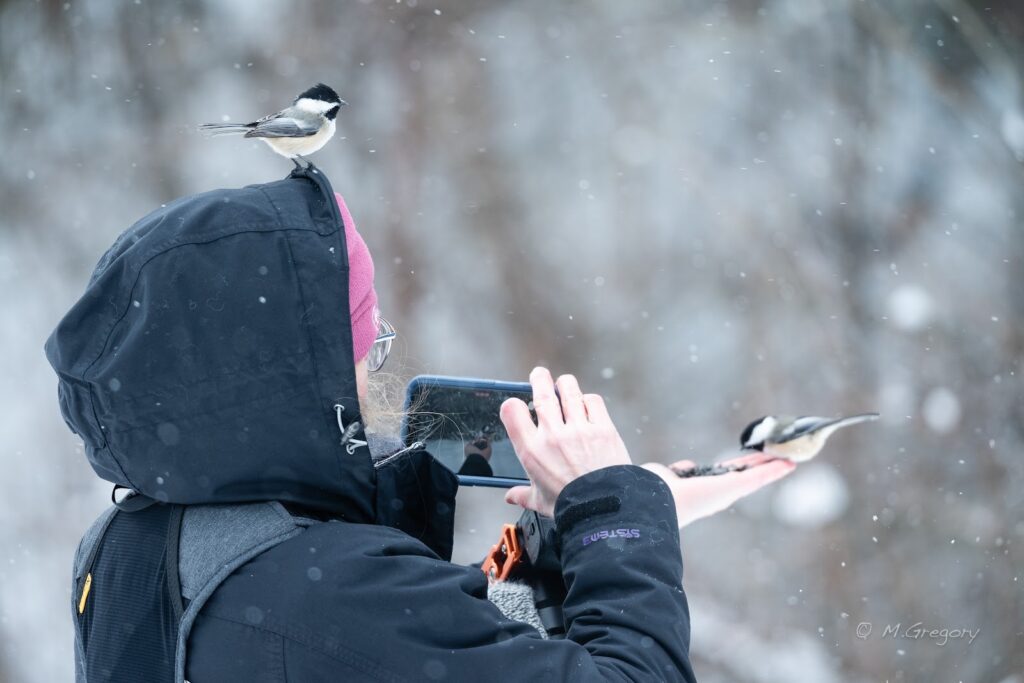
The rest of the day Saturday was spent visiting spots where we hoped to find Canada Jays, a bird that has unfortunately been in steep decline in Algonquin Park. We did not find them Saturday, but we did find dozens of Black-capped Chickadees and Red-breasted Nuthatches looking for a handout.
Birds employ many feeding strategies during the winter, and taking handouts from people is one of those.
Some birds like Chickadees so readily take food from people it is considered to be a natural behavior. Some of us even had birds landing on our hats, binoculars, and cameras.
The (Failed) Search for Moose—and a Bills Win
After unsuccessful attempts to find Canada Jays and Spruce Grouse, we headed back to Huntsville and our hotel before dinner at East Side Mario’s. This particular restaurant is a great place to watch playoff football in January, but unfortunately things did not go the Bills’ way this year. Thankfully the Bills fans on our trip had two more days of birding to get our minds off the disappointing end of the season!
Our goal for Sunday morning was to be on highway 60 in the park as early as possible in hopes of seeing a moose or an Algonquin Wolf. We still only have the one sighting of a moose in 2019, but we saw several groups of Pine Grosbeaks along the road as we drove to our first stop at Mew Lake.
The bear-safe garbage cans at the Mew Lake Campground are the easiest spots to see a Pine Marten—a very cute and photogenic member of the weasel family.
A lot of this trip involves timing and luck, and if we aren’t in the right place at the right time, we can miss a target species. Unfortunately, luck wasn’t on our side this time and we headed to Opeongo Road in hopes of finding Canada Jays.
Canada Jays: One of Algonquin’s Most Charismatic & Beloved Birds
Opeongo Road leads to Opeongo Lake, the largest lake in Algonquin Park, but it is only plowed to a certain point in the winter. We drove as far as we could and then got out to walk the last kilometer to Cameron Creek where the Canada Jays had been seen the day before.
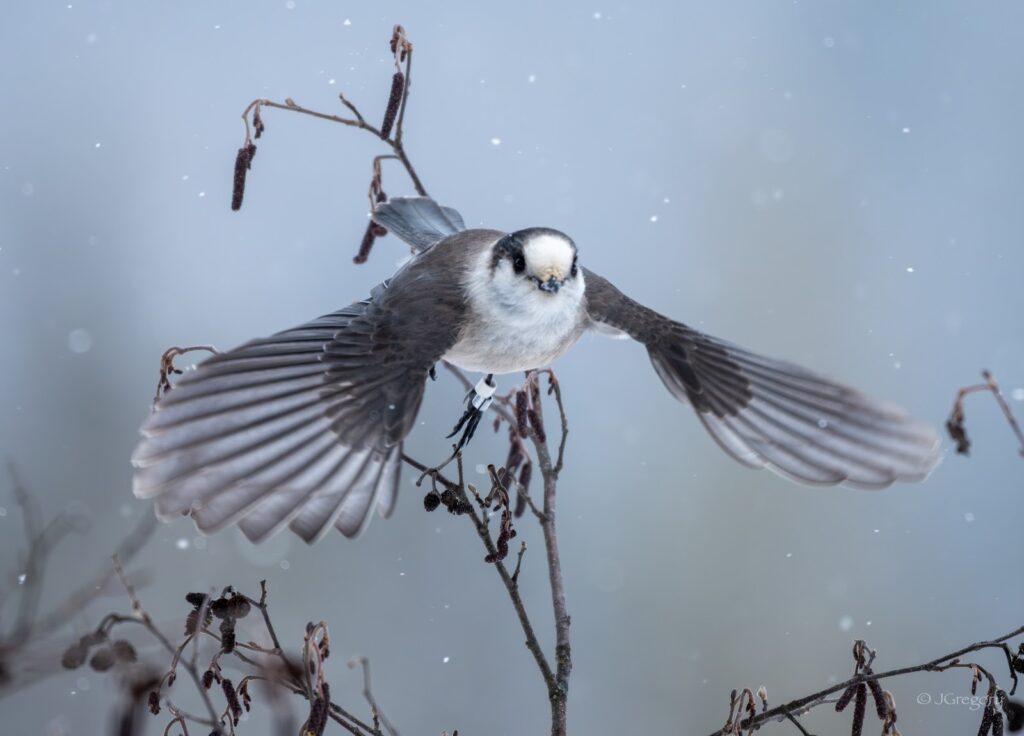
At first everything was quiet, but far down the road ahead we could see one bird. I shouted to get its attention, and soon five Canada Jays were flying down the road to us. Canada Jays get a lot of their food by stealing from other birds and scavenging from wolf kills.
They have also learned that humans are an easy source of food, and have been seeking out people for thousands of years. There is even an exhibit in the visitors centre museum of an indigenous person feeding a Canada Jay.
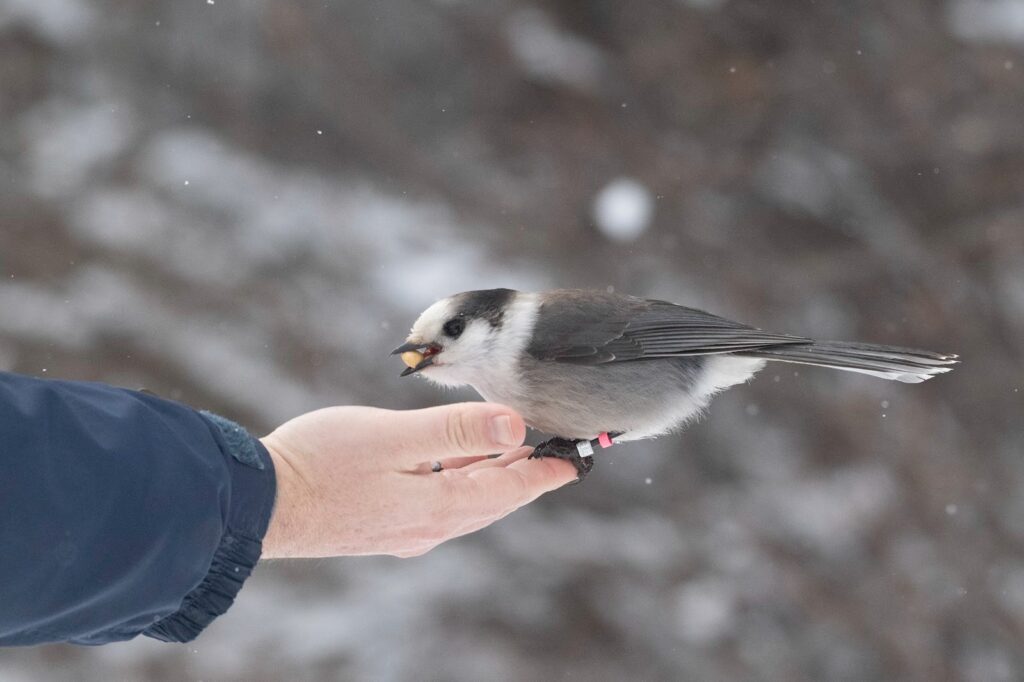
If you visit Algonquin Park in the Winter, the Canada Jays will be looking for you. If you visit in the summer, you likely won’t find one, as food is so abundant they don’t need to seek out people.
This was what many of the people on the trip signed up for: a chance to see a Canada Jay up close and have it take food from their hand.
We offered them peanuts, sunflower seeds, and even beef jerky.
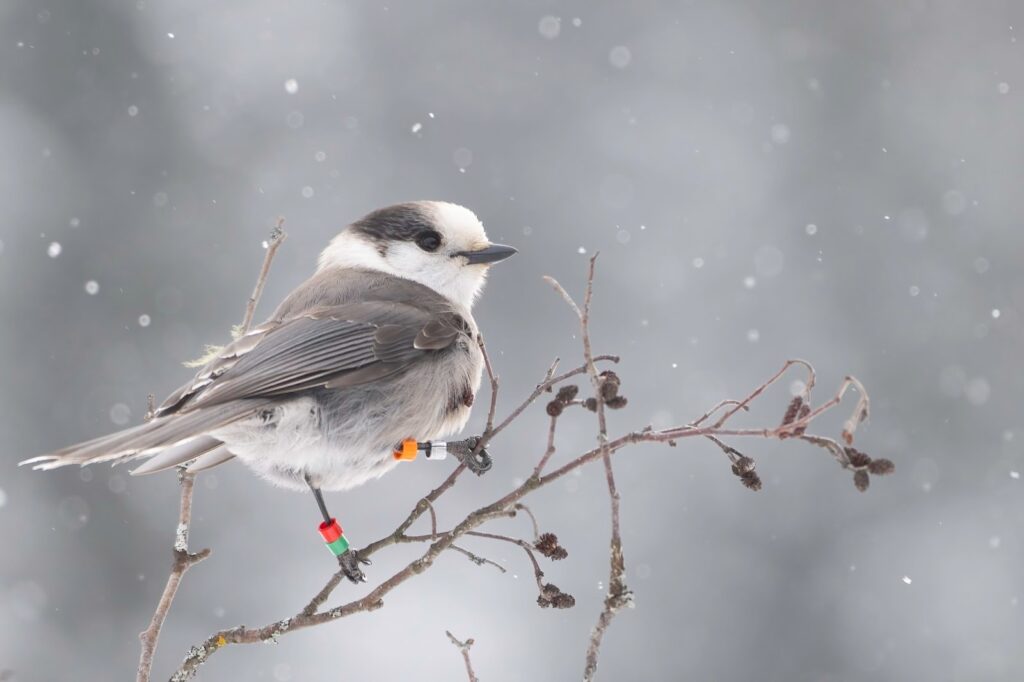
All the Canada Jays in Algonquin Park are banded with a unique combination of colors on their right and left legs so that they can be identified. Canada Jays are declining in the park due to a warming climate and the resulting free-thaw cycle that they are not adapted to deal with. Canada Jays nest in winter, and cache all the extra food they find to help them feed their chicks when the time comes. If there is a thaw in January or February, their cache of food can spoil, resulting in failed nests. This study of Canada Jays has been ongoing for decades in the Park. It is hard to imagine Algonquin Park without Canada Jays, but I can say they are harder to find in the past few winters.
The Adorable Pine Marten & A Ruffed Grouse
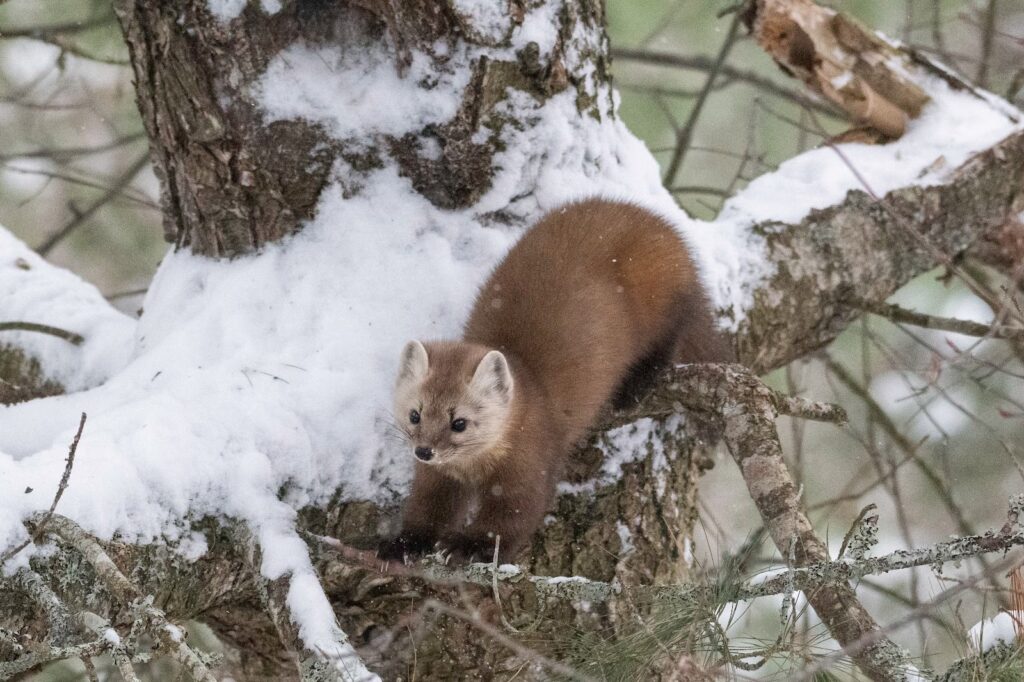
After Opeongo Road we headed back to the visitor’s centre with lunch from the Mad Musher in Whitney—the town at the east end of the park.
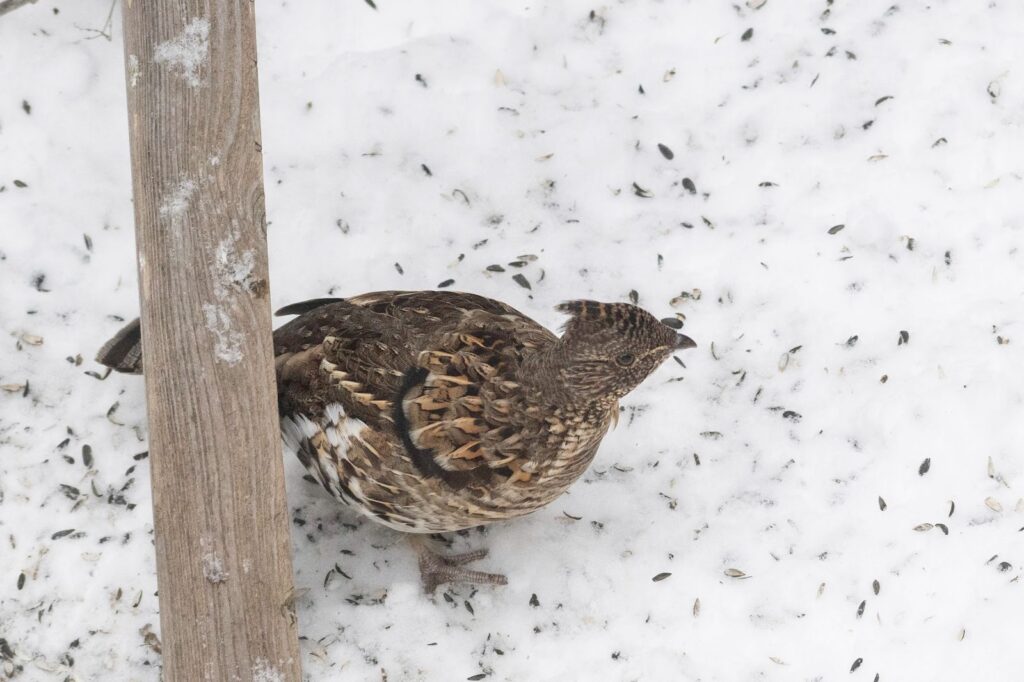
During lunch, we all had a chance to explore the museum and watch the birdfeeders. We were lucky and in the right place at the right time to see a Pine Marten at the visitors centre feeders! A Ruffed Grouse also made an appearance.
It was a treat to see a bird that is usually hidden and hard to see right out in the open.
After leaving Opeongo Road, we set off for the two-mile Big Pines trail in hopes of tracking down a Black-backed Woodpecker, a specialist of the Boreal Forests. We walked quietly, listening for the tapping and drumming of woodpeckers, only to find familiar Downy and Hairy Woodpeckers. Despite not finding our target, Big Pines trail was beautiful and lived up to its name!
A Surprise Snowy Owl Sighting–Right in the Town’s Centre!
We returned to Huntsville and had dinner at the Huntsville Brewhouse, a restaurant we have eaten at on every Algonquin Trip. A great local restaurant, they have fun things like poutine and trout tacos on their menu, as well as a great selection of locally brewed beer.
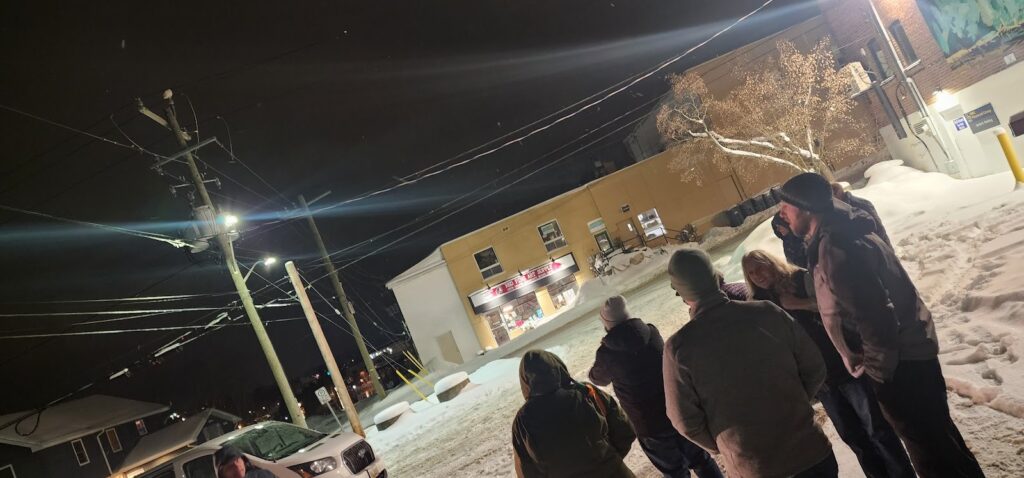
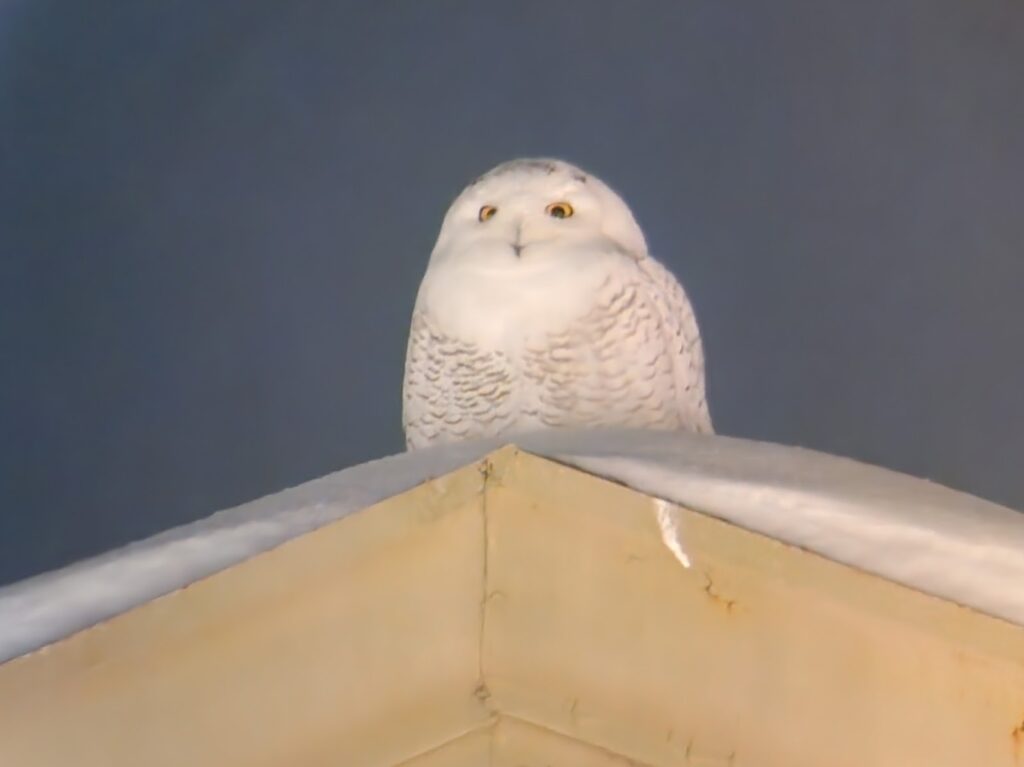
After dinner, Mike and I went to retrieve the vans and pick up everyone in front of the restaurant. When we turned the corner to the parking lot where we left the vans, I noticed a big lump of snow on top of a utility pole. We got a little closer and…
“Mike is that a Snowy Owl?!”
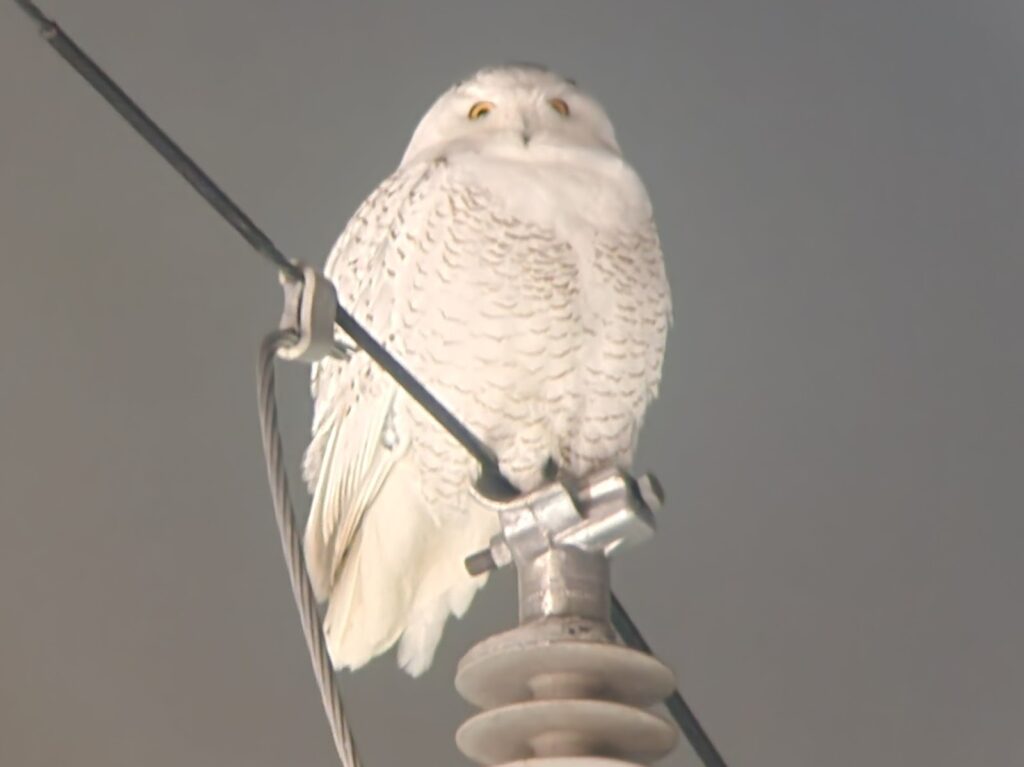
Mike rushed back to the restaurant to bring everyone back to the Snowy Owl. So much of this trip is about being in the right place at the right time, and getting lucky. It sat on top of the pole while I set up my spotting scope that was luckily still in the van.
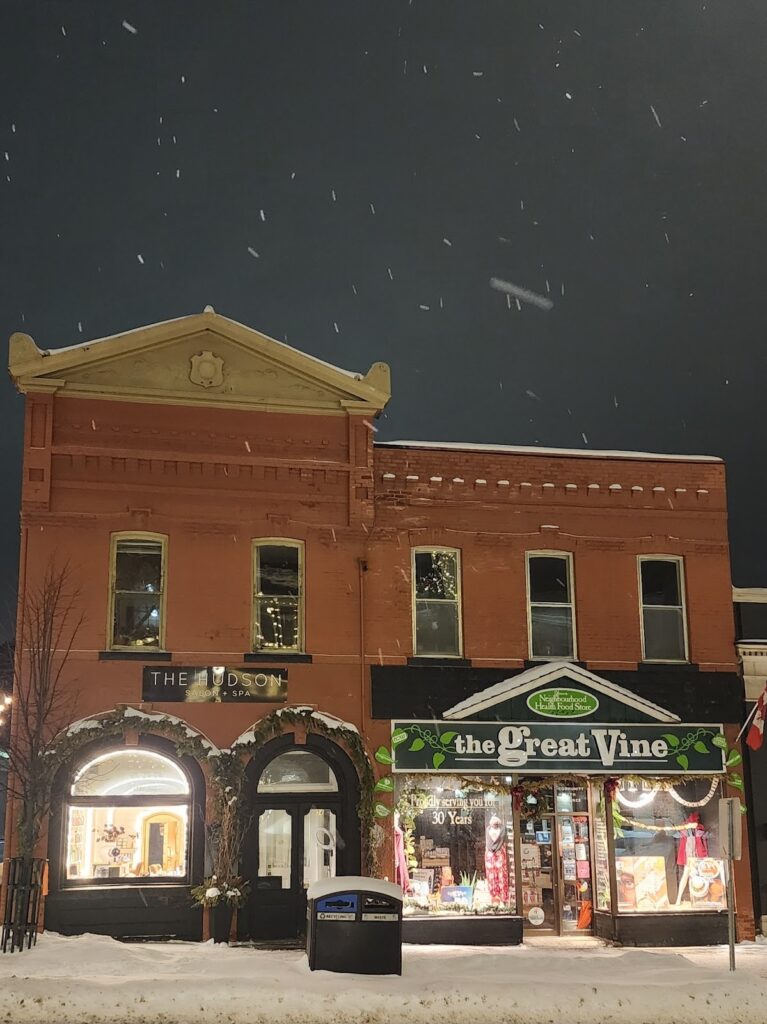
Since we were out to dinner, nobody had their binoculars or cameras. After dropping everyone off back at the hotel, Mike and I returned with three others in our group. It had moved from the utility pole to the top of a shop on Main Street—creating a picturesque scene of small town Canada. We climbed the steps of the town hall across the street for a better view.
We certainly don’t need to drive four hours into Canada to see a Snowy Owl—we get them most winters in Western New York—but this was definitely a special sighting!
Sprucing Up Before We Left
After leaving the Snowy Owl, it was time to get back to the hotel and get ready for a long drive the next day. Our first stop Monday was to the Spruce Bog Boardwalk where we had hoped to see a Spruce Grouse. I have been to Algonquin Park over a dozen times and only seen Spruce Grouse five times, and all the Spruce Grouse I have ever seen (seven in total) have been at the Spruce Bog Boardwalk. In fact, five of those seven were in the same tree!
We spent about two hours searching with no luck. Sometimes that’s how it goes with birding. We have run six of these trips and we have never managed to see every one of the target birds on one trip.
Many of our group were worried about the winter storm that was hitting home that afternoon, so it was time to get on the road, but there were still two stops planned.
Another Year in the Books: Group Photo Traditions & Canadian Potato Chips
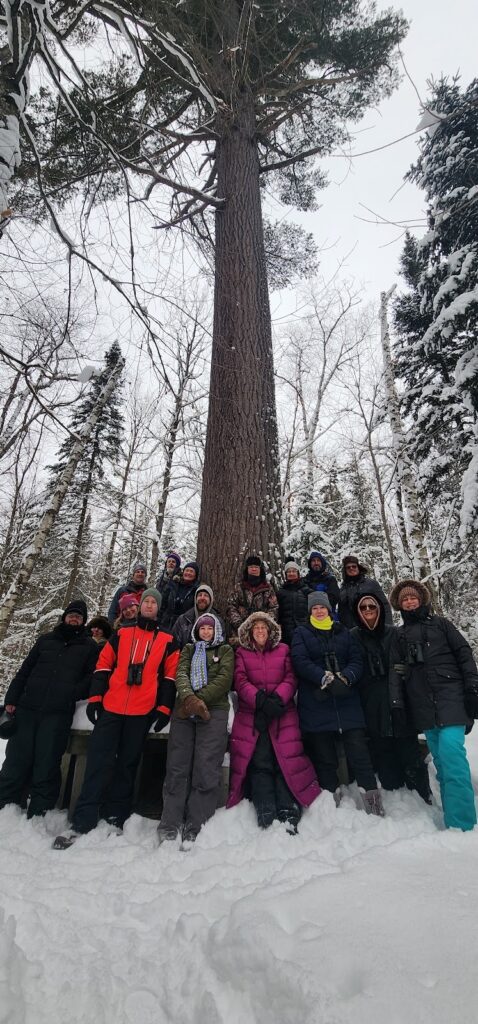
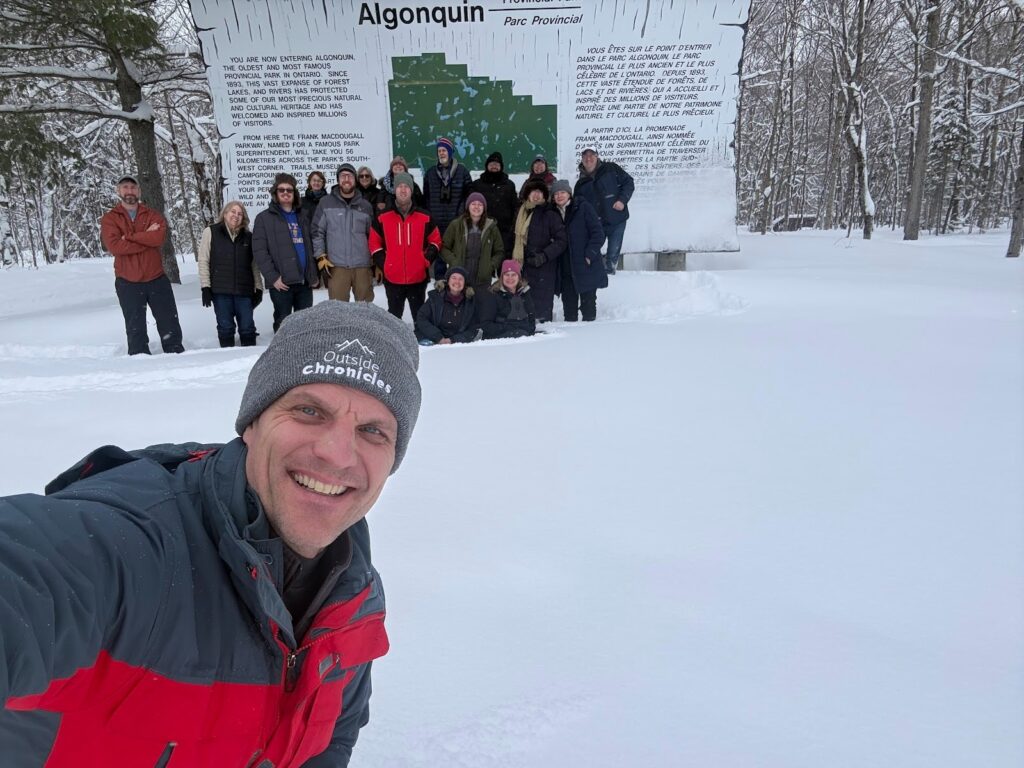
The last stop in Algonquin Park was at the West Gate park sign, where it is my tradition to always take a group photo. I’m thankful for everyone who indulged me on this, and for Mike the photographer!
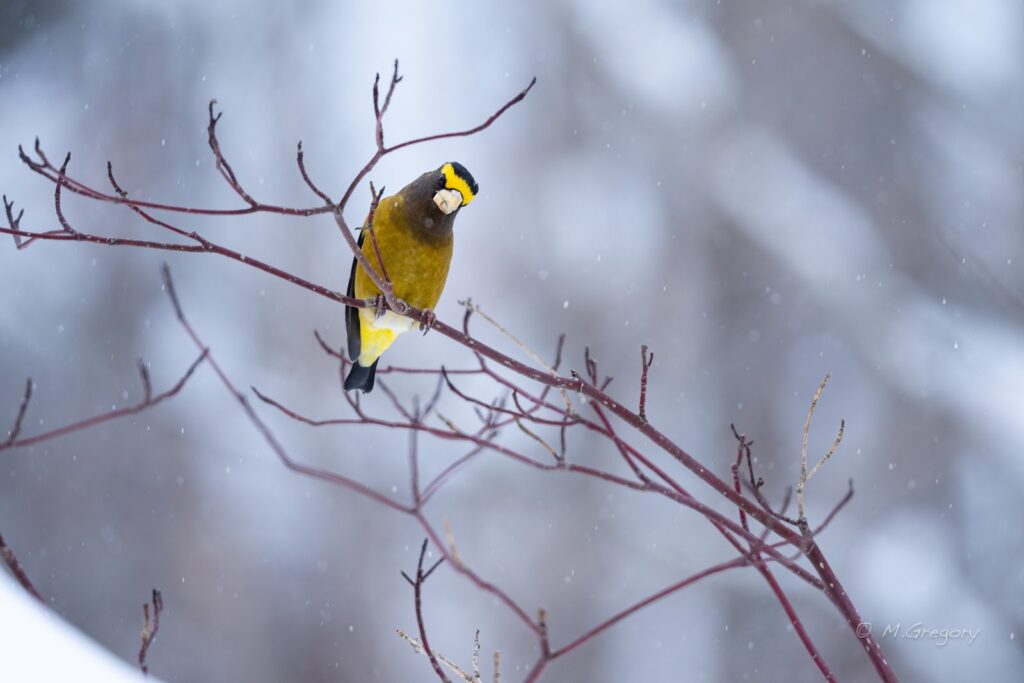
Our final stop was in Dwight, at the house of retired Algonquin Park Head Naturalist Rick Stronks and his wife Kelly. On last year’s trip, we were invited to see Evening Grosbeaks at his feeders that never showed, and when we announced the 2026 trip, Rick reached out and generously invited us again. When we arrived at his house, the trees above his house were loaded with chattering Evening Grosbeaks, and a lone Redpoll was visiting his feeder.
After Rick’s house, we were on the road with bags of chips in flavors you could only get in Canada—All Dressed, Jerk Chicken, Turkey Dinner, and Tikka Massala—and on our way home.

Join Us on Next Year’s Algonquin Birding Tour!
Sometime over the summer we will be announcing our 2027 Algonquin Park Trip, so stay tuned.
This trip fills up every year—and for good reason! To learn more and explore highlights from recent trips, visit our website.
We’d love to have you join us next time around!
Interested in learning more about birding? Join our weekly Friday morning birding programs at Beaver Meadow Nature Preserve. Visit our website to stay updated on upcoming programs and events, discounts and other perks that come with a Buffalo Audubon membership, and so much more.
Buffalo Audubon leads and inspires Western New Yorkers to connect with and protect the natural world through bird-focused activities, advocacy, and habitat restoration. Our organization launched the Bird-Friendly Buffalo movement in 2025, to help raise awareness and guide communities with practical solutions to build a city where birds can thrive.