Each year, billions of birds migrate south for the winter months, with as many as 400 million birds in flight at the same time in one night over the United States.
Migrating not only helps birds avoid harsh winter conditions, but find more reliable food sources and secure locations for mating and raising their young.
However, not all birds migrate. While Ruby-throated Hummingbirds and Red-winged Blackbirds make the trip each fall—from the United States to Central America, Mexico, or the Southern United States, respectively—other species brave the cold temperatures with the help of unique biological and adaptive behaviors.
For example, despite weighing less than 15 grams, Redpolls can survive in temperatures 100 degrees below freezing. How do they do it?
Here’s a look at which birds stick around during the colder months, as well as a bit about how they survive the long, frigid winter season.

Which Birds Don’t Migrate?
As every region is home to unique species, the birds you can expect to see in your backyard during the winter months are largely dependent on your location.
In Western New York, for example, some of the most common species that do not migrate include:
- Northern Cardinal
- Blue Jay
- Black-capped Chickadee
- Downy Woodpecker
- Red-bellied Woodpecker
- Dark-eyed Junco
- Tufted Titmouse
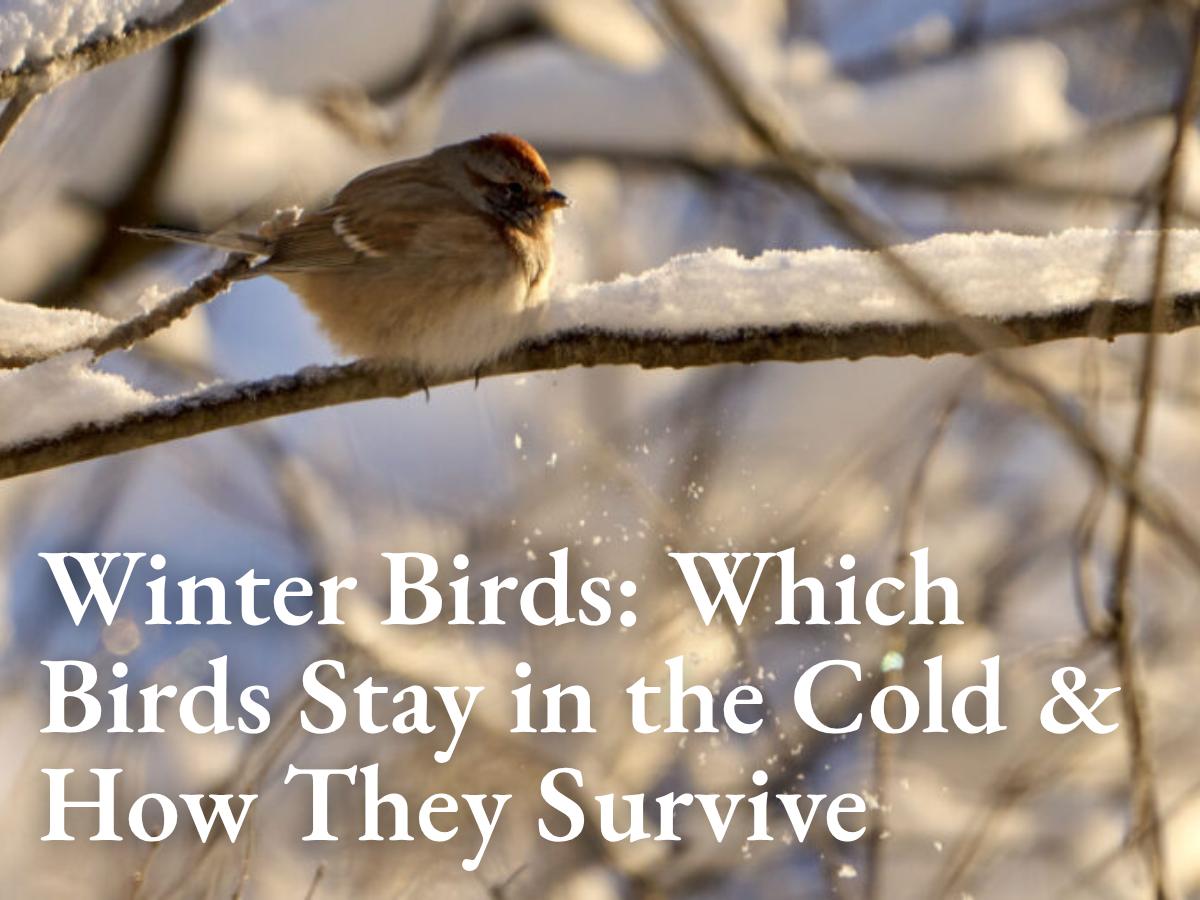
- American Tree Sparrow
- Mourning Dove
- Bald Eagle
- American Crow
- Common Raven
- Red-breasted Nuthatch
- Canada Goose
- Gulls (various species)
- Mallard
- Turkey Vulture
- American Goldfinch
- Ruffed Grouse
- Great Horned Owls, Barred Owls, & others
Granted, these are just a few that remain in the Western New York region during winters; there are plenty more!
And the way that they do so is through a combination of unique biological and adaptive factors.
How Do Birds Survive in the Winter?
Unlike humans, birds can’t just stroll indoors and start a woodburning fire when they get chilly. Nor can they order delivery when they run out of food.
Birds survive the long winter months through ingrained, evolutionarily-honed adaptive instincts, such as:

Fluffing Their Feathers
No, their feathers don’t get ruffled because they’re upset. For birds, fluffing their feathers helps create more air pockets that trap heat and provide natural insulation—like donning a big, fluffy down coat. They do this especially during the coldest times of the day, namely at dusk or during high winds and snowstorms.
Their ability to maintain heat also has to do with their types of feathers—with, both, an outer, water-resistant layer, and a second layer of down feathers underneath.
If living in more extreme climates, many birds will grow extra, more substantial feathers during their fall molt which help them cope with colder temperatures.
Regulating Body Temperature
With an average resting body temperature of anywhere from 102–109°F—and higher during active states—birds’ have a higher internal temperature than humans, which helps them better regulate in the cold.
They are also endothermic, meaning they can regulate their body temperature regardless of external circumstances, and sometimes cool down specific parts of their body—such as their feet—while their core remains consistent (more on that later!).
To boot, birds also use a countercurrent heat exchange system. With veins and arteries that are close together, the cool blood coming from their feet is naturally warmed on the way back to the heart.
As another survival strategy, some birds, such as hummingbirds, can also enter a torpor state on particularly cold nights when food is scarce. This “mini-hibernation” lasts for just a few hours or overnight, during which their body temperature can decrease by as much as 50°F to conserve energy.
Minding Their Feet
Birds’ endothermic nature becomes particularly helpful during extreme conditions, when they will lower the internal temperature of their feet to approach freezing (but not below it, to avoid hypothermia), while maintaining a consistent core temperature. In doing so, they use less energy attempting to fight the cold to heat their feet.
Birds also have fewer nerve endings in their feet, making them less sensitive to cold.
However, for extra heat on a particularly cold day, you might see some birds tucking one foot at a time up into their feathers—like a flamingo—to warm up.
Finding Shelter
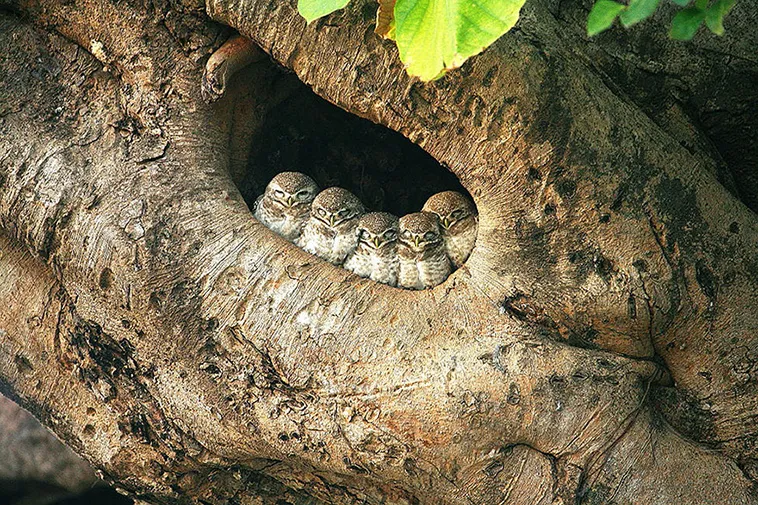
Not unlike humans, birds will often hunker down in the extreme cold. For example, bluebirds, woodpeckers, and chickadees might nest in cavities or tree holes, while titmice or juncos often opt for dense trees and shrubs, explains an article from Audubon Magazine.
These shelters help them brave harsh winds and temperatures, and regulate body temperature. But in the event they need a little extra heat, they employ another strategy: cuddle puddles.
Yes, if you see a row of birds clustered together in the winter months, they’re helping to improve their body heat—a common (and adorable) practice among bluebirds and sparrows in particular, continues the Audubon Magazine article.
Eating Extra Food
As is the case with many animals, birds up their caloric intake as much as they can during the winter months. Granted, they already have a metabolism that’s twice as fast as mammals of similar size—and it requires even more energy to counteract heat loss.
That said, birds eat as much as possible throughout the winter—often snacking on a diet of seeds, nuts, sap, insects (although more scarce), among other things to build fat. This is part of the reasons why feeders—especially those left up year-round—can be extremely helpful to during winter!
Caching Food
Being incredibly adaptive, birds do not simply rely on foods they find that day as their only source. Instead, they cache, or stockpile, ample food in a safe location for the winter—everything from seeds and nuts to acorns, berries, and more.
In fact, some species, like Black-capped Chickadees, might store hundreds or even thousands of nuts away in tree nooks or inside fallen logs—and can remember where they put them for several months, or even years afterward.
A Remarkable Feat for a Remarkable Animal
For such a small animal, non-migratory birds pack an impressive punch when it comes to surviving the winter months.
Through a combination of biological characteristics and adaptations—including fluffing their feathers, regulating endothermically, tucking their feet, finding shelter, and caching and eating extra food—birds can not only brave the cold, but thrive in it.
Interested in learning more about birds? Join Buffalo Audubon for a range of bird-focused activities and events!
Visit our website to stay updated on upcoming programs and events such as our weekly Friday morning birding hikes, Winter Birding Challenge through Outside Chronicles, and so much more.
Buffalo Audubon leads and inspires Western New Yorkers to connect with and protect the natural world through bird-focused activities, advocacy, and habitat restoration. Our organization launched the Bird-Friendly Buffalo movement in 2025, to help raise awareness and guide communities with practical solutions to build a city where birds can thrive.
Learn more about us, join in the conversation, and explore Buffalo Audubon member benefits, and more on our website at BuffaloAudubon.org.
Leave a Reply